





The drug phencyclidine (more commonly known as PCP or ‘Angel Dust’) antagonizes glutamic acid non-competitively at the NMDA receptor. For the same reasons, dextromethorphan and ketamine also have strong dissociative and hallucinogenic effects. Acute infusion of the drug LY354740 (also known as eglumegad, an agonist of the metabotropic glutamate receptors2 and 3) resulted in a marked diminution of yohimbine-induced stress response in bonnet macaques (Macaca radiata); chronic oral administration of LY354740 in those animalsContinue Reading

Oxalyldiaminopropionic acid (ODAP) is a structural analogue of the neurotransmitter glutamate found in the grass pea Lathyrus sativus. It is the neurotoxin responsible for the motor neuron degeneration syndrome lathyrism. Woldeamanuel, Yohannes W.; Hassan, Anhar; Zenebe, Guta (2011-11-12). “Neurolathyrism: two Ethiopian case reports and review of the literature”. Journal of Neurology. 259 (7): 1263–1268. doi:10.1007/s00415-011-6306-4. ISSN 0340-5354. PMID 22081101. S2CID 27543906. Sources ODAP is found in the seeds of theContinue Reading

The sweet pea, Lathyrus odoratus, is a flowering plant in the genus Lathyrus in the family Fabaceae (legumes), native to Sicily, southern Italy and the Aegean Islands. It is an annual climbing plant, growing to a height of 1–2 metres (3 ft 3 in – 6 ft 7 in), where suitable support is available. The leaves are pinnate with two leaflets and a terminal tendril, which twines around supporting plants and structures, helping theContinue Reading

Tryptophan tryptophylquinone (TTQ) is an enzyme cofactor, generated by posttranslational modification of amino acids within the protein. Methylamine dehydrogenase (MADH), an amine dehydrogenase, requires TTQ for its catalytic function. From Wikipedia where this page was last updated June 22, 2022 See also Amicyanin is a type I copper protein that plays an integral role in electron transfer. In bacteria such as Paracoccus denitrificans, amicyanin isContinue Reading

Kaede is a photoactivatable fluorescent protein naturally originated from a stony coral, Trachyphyllia geoffroyi. Its name means “maple” in Japanese. With the irradiation of ultraviolet light (350–400 nm), Kaede undergoes irreversible photoconversion from green fluorescence to red fluorescence. Kaede is a homotetrameric protein with the size of 116 kDa. The tetrameric structure was deduced as its primary structure is only 28 kDa. This tetramerization possibly makes KaedeContinue Reading

Nucleic acid secondary structure is the basepairing interactions within a single nucleic acid polymer or between two polymers. It can be represented as a list of bases which are paired in a nucleic acid molecule. Dirks, Robert M.; Lin, Milo; Winfree, Erik & Pierce, Niles A. (2004). “Paradigms for computational nucleic acid design”. Nucleic Acids Research. 32 (4): 1392–1403. doi:10.1093/nar/gkh291. PMC 390280. PMID 14990744. Continue Reading

In a chain-like biological molecule, such as a protein or nucleic acid, a structural motif is a common three-dimensional structure that appears in a variety of different, evolutionarily unrelated molecules. Johansson, M.U. (23 July 2012). “Defining and searching for structural motifs using DeepView/Swiss-PdbViewer”. BMC Bioinformatics. 13 (173): 173. doi:10.1186/1471-2105-13-173. PMC 3436773. PMID 22823337.  A structural motif does not have to be associated with a sequence motif; it can be representedContinue Reading

For beta turns, see Beta turn. A turn is an element of secondary structure in proteins where the polypeptide chain reverses its overall direction. Definition According to one definition, see Rose et al. 1985 in the References a turn is a structural motif where the Cα atoms of two residues separated by a few (usually 1Continue Reading

β turns (also β-bends, tight turns, reverse turns, Venkatachalam turns) are the most common form of turns—a type of non-regular secondary structure in proteins that cause a change in direction of the polypeptide chain. They are very common motifs in proteins and polypeptides. Venkatachalam, CM (1968). “Stereochemical criteria for polypeptides and proteins. V. Conformation of a system of three linked peptide units” (PDF). Biopolymers. 6 (10): 1425–1436. doi:10.1002/bip.1968.360061006. hdl:2027.42/37819. PMID 5685102.Continue Reading

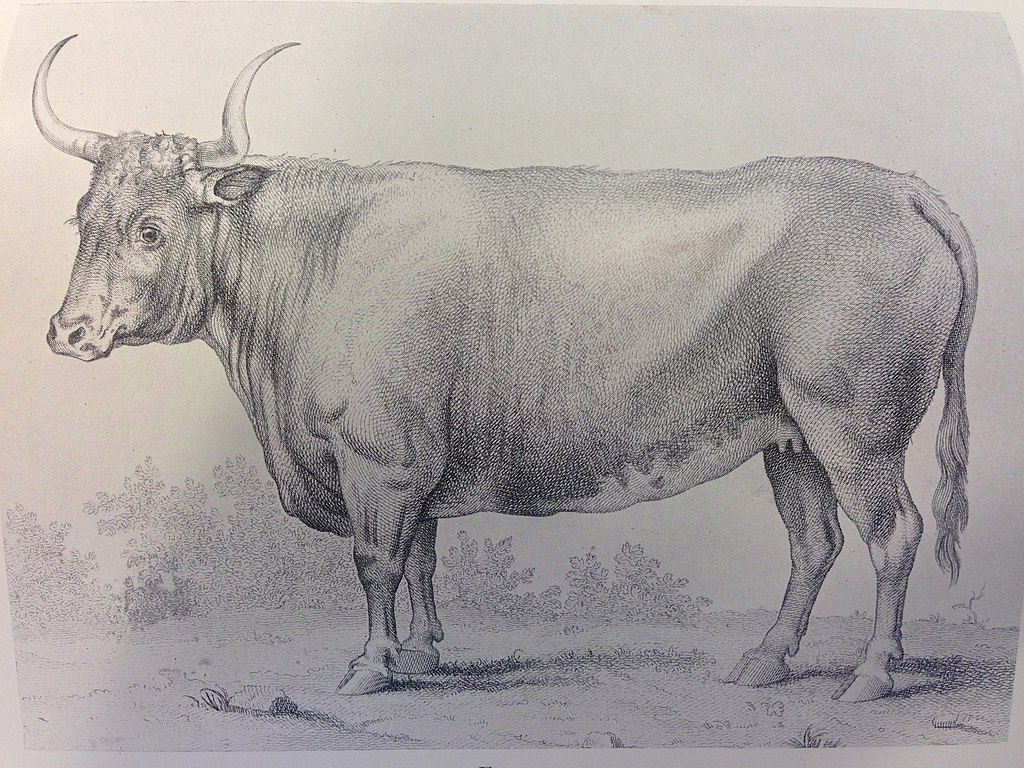
A freemartin or free-martin (sometimes martin heifer) is an infertile female cattle with masculinized behavior and non-functioning ovaries.[1] Phenotypically, the animal appears female, but various aspects of female reproductive development are altered due to acquisition of anti-Müllerian hormone from the male twin.[2]  Genetically, the animal is chimeric: karyotypy of a sample of cells shows XX/XY chromosomes. The animal originates as a female (XX), but acquires the male (XY) componentContinue Reading