
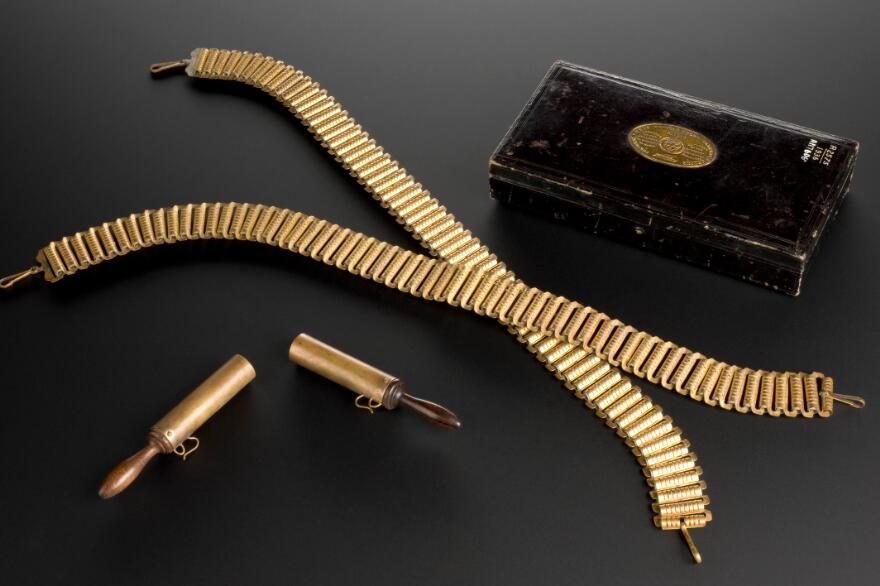
Description When placed next to the skin, the copper and zinc chains produced a mild electric current. The current was said to treat aches and pains in the joints and…
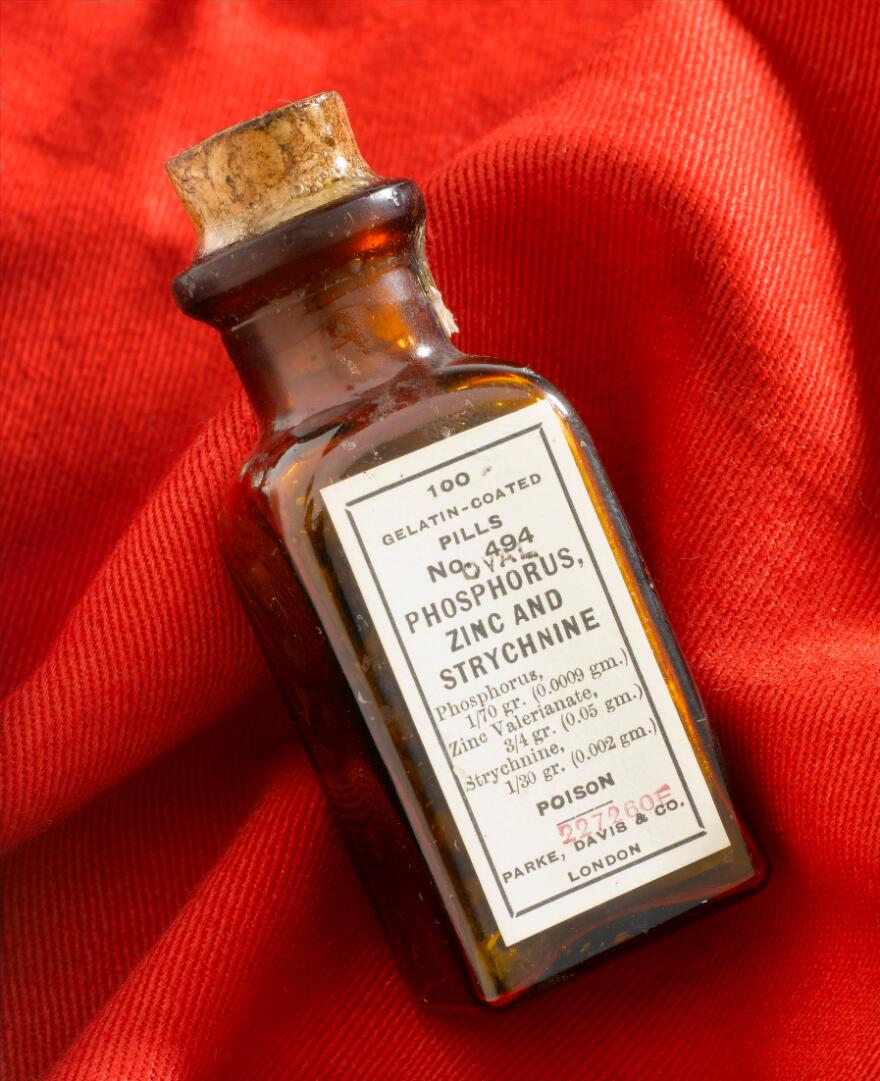
Brown glass bottle of phosphorus, zinc and strychnine pills,
Description Not much is known about why someone would take these pills. Strychnine is a stimulant for the central nervous system and may have been used to treat nerve disorders.…
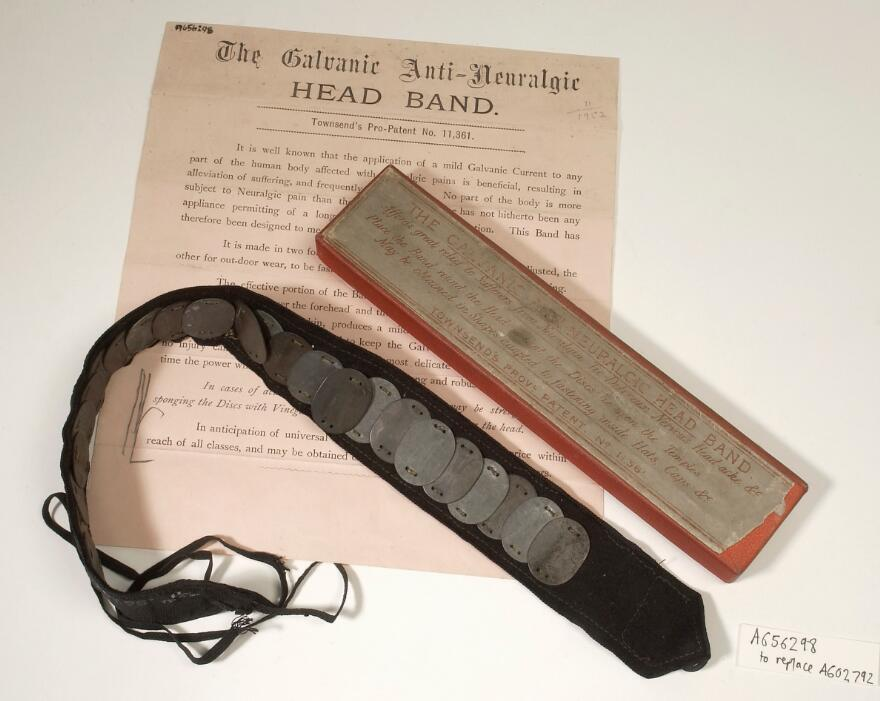 Galvanic anti-neuralgic headband made up of a series of 24 alternate zinc and copper discs mounted onto a felt and ribbon band. The headband was tied around the head, with the discs resting on the temples, where perspiration would act on the discs by producing a mild galvanic current">
Galvanic anti-neuralgic headband made up of a series of 24 alternate zinc and copper discs mounted onto a felt and ribbon band. The headband was tied around the head, with the discs resting on the temples, where perspiration would act on the discs by producing a mild galvanic current
Galvanic anti-neuralgic headband made up of a series of 24 alternate zinc and copper discs mounted onto a felt and ribbon band. The headband was tied around the head, with…
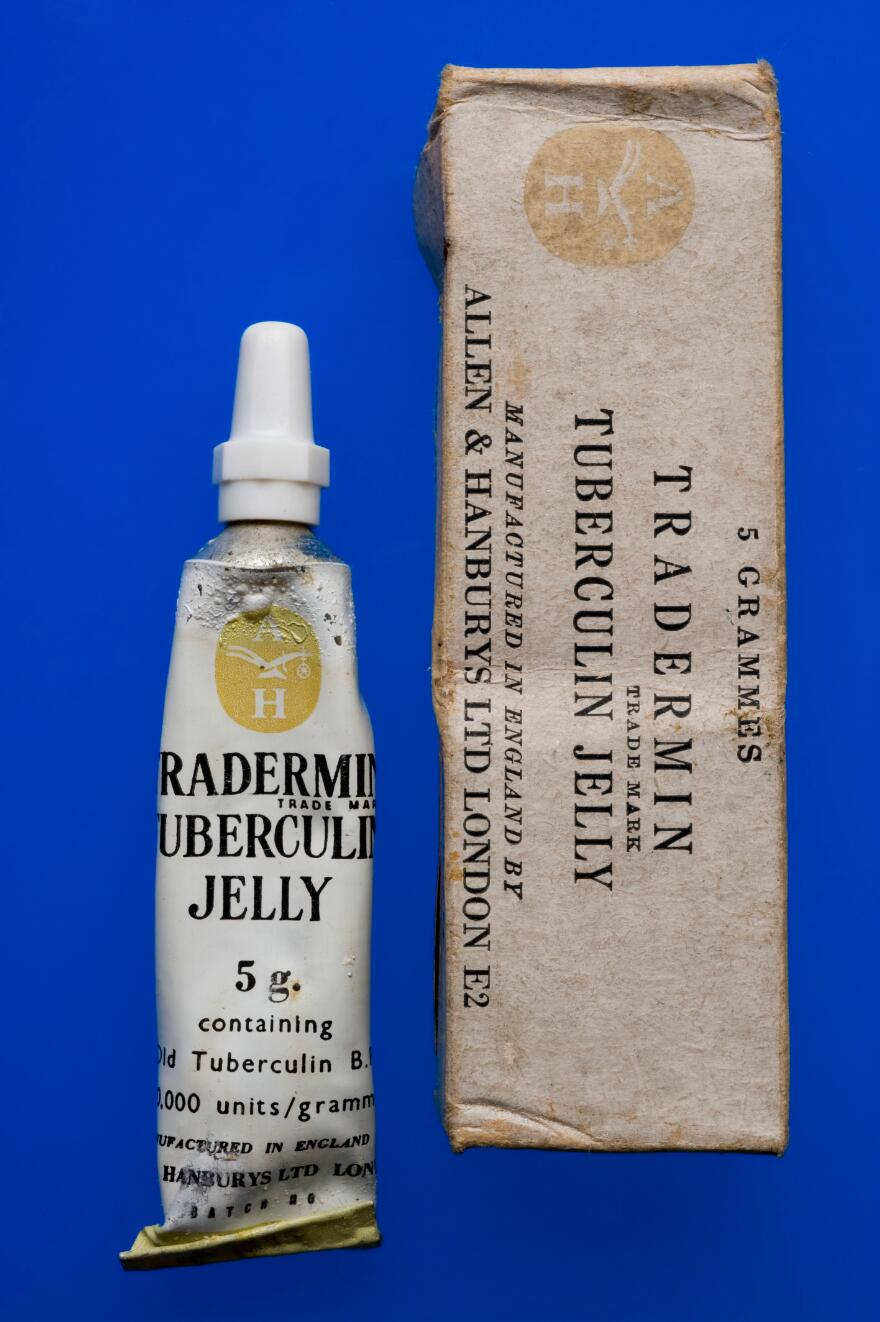 Tube of tuberculin jelly, London, England, 1955">
Tube of tuberculin jelly, London, England, 1955
This jelly may have been used to conduct a test to see whether a person has been exposed to bacteria-causing tuberculosis. This test, called the ‘Fluorpa-per test’, was introduced in…