





Notes By multi-media Cuban-born artists Eduardo Ponjuán and René Francisco who work together according to similar poster found on http://fons.upv.es – Figure’s skirt is edged with a wooden ruler and outlined with rope forms;; her arms are painted and chalked to create a two-tone effect; white beads [?] divide herContinue Reading
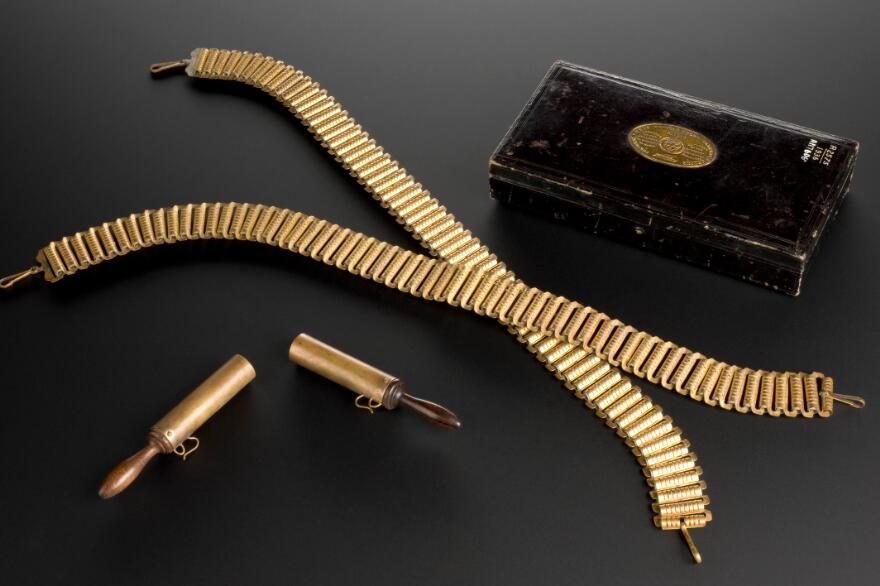
Description When placed next to the skin, the copper and zinc chains produced a mild electric current. The current was said to treat aches and pains in the joints and muscles (rheumatism) and the nerves (neuralgia). The chains were also recommended for sexual and reproductive problems. Isaac Louis Pulvermacher inventedContinue Reading

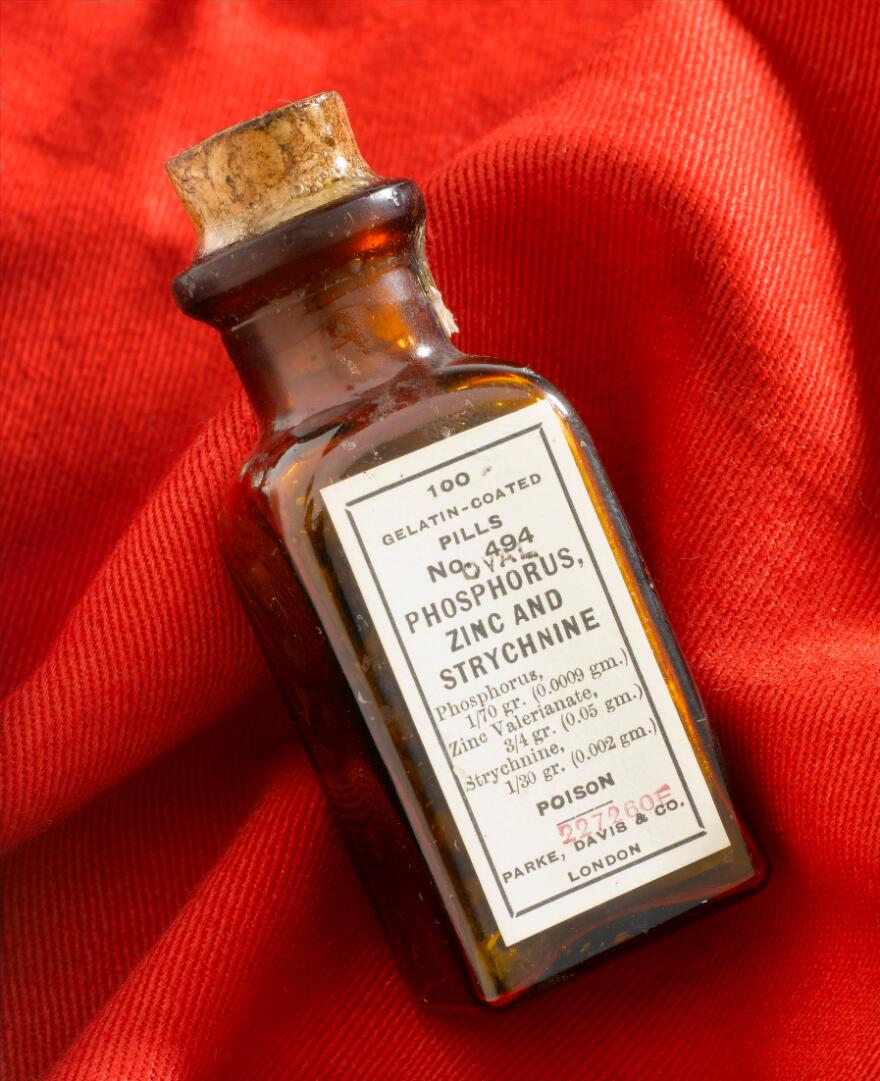
Description Not much is known about why someone would take these pills. Strychnine is a stimulant for the central nervous system and may have been used to treat nerve disorders. High doses of this plant extract are poisonous. The pills are coated with gelatine so they are easy to swallow.Continue Reading

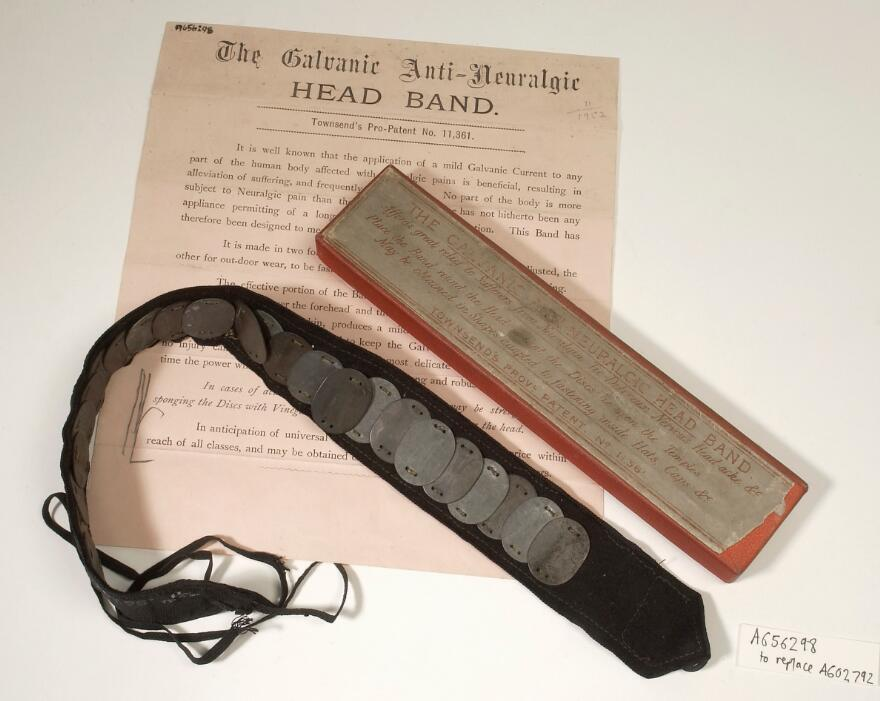
Galvanic anti-neuralgic headband made up of a series of 24 alternate zinc and copper discs mounted onto a felt and ribbon band. The headband was tied around the head, with the discs resting on the temples, where perspiration would act on the discs by producing a mild galvanic currentContinue Reading

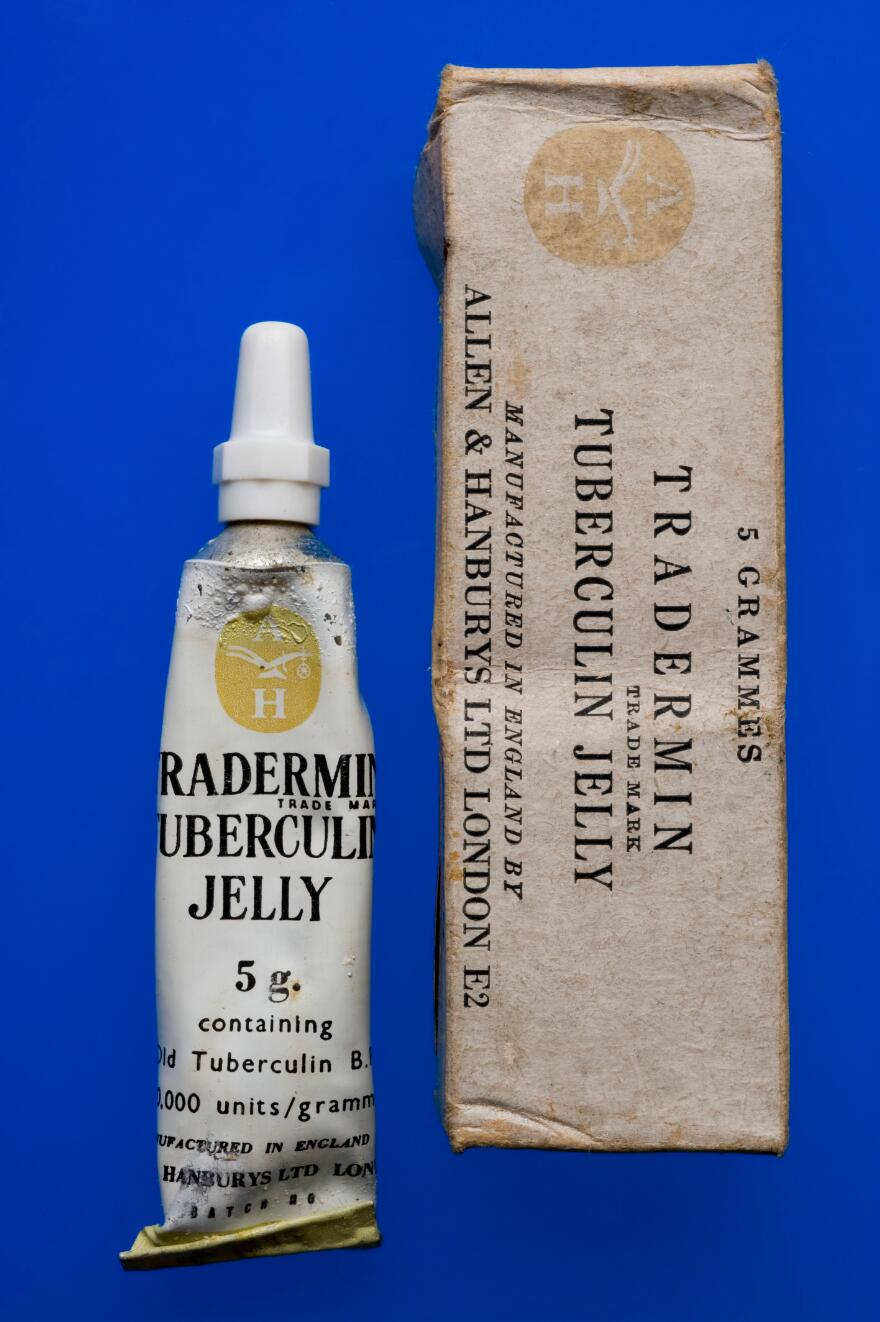
This jelly may have been used to conduct a test to see whether a person has been exposed to bacteria-causing tuberculosis. This test, called the ‘Fluorpa-per test’, was introduced in 1936. A 20 mm high “V” was applied in jelly on the left hand side of the spine. Once theContinue Reading

The carbonic anhydrases (or carbonate dehydratases) (EC 4.2.1.1) form a family of enzymes that catalyze the interconversion between carbon dioxide and water and the dissociated ions of carbonic acid (i.e. bicarbonate and hydrogen ions). The active site of most carbonic anhydrases contains a zinc ion. They are therefore classified as metalloenzymes. The enzyme maintains acid-base balance and helps transport carbon dioxide. Carbonic anhydrase helps maintain acid–base homeostasis, regulate pH, and fluid balance. Depending on its location, the role ofContinue Reading

A carboxypeptidase (EC number 3.4.16 – 3.4.18) is a protease enzyme that hydrolyzes (cleaves) a peptide bond at the carboxy-terminal (C-terminal) end of a protein or peptide. This is in contrast to an aminopeptidases, which cleave peptide bonds at the N-terminus of proteins. Humans, animals, bacteria and plants contain several types of carboxypeptidases that have diverse functions ranging from catabolism to protein maturation. At least two mechanisms haveContinue Reading

Arginine is the amino acid with the formula (H2N)(HN)CN(H)(CH2)3CH(NH2)CO2H. The molecule features a guanidino group appended to a standard amino acid framework. At physiological pH, the carboxylic acid is deprotonated (−CO2−) and both the amino and guanidino groups are protonated, resulting in a cation. Only the l-arginine (symbol Arg or R) enantiomer is found naturally. Arg residues are common componentsContinue Reading