
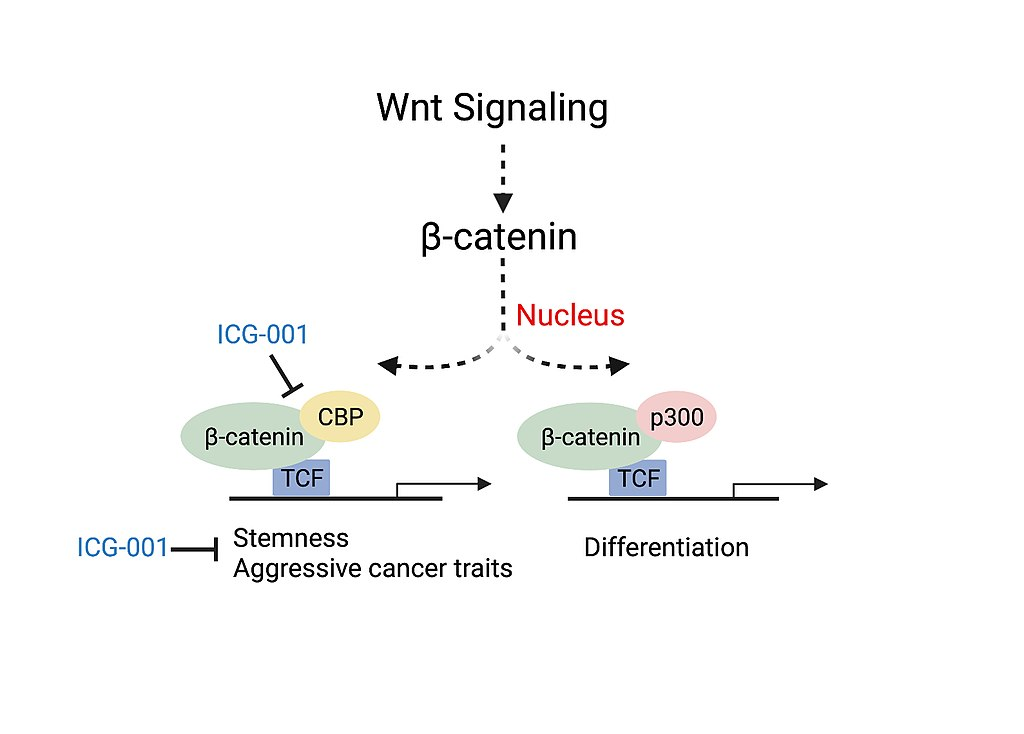
CBP has been shown to play a role in every stage of tumor development
Due to its critical role in regulation of cell proliferation, growth, migration and apoptosis, it is considered to be an oncogene, or tumor suppressor. Contrarily To date, increased CBP activity has been…
Proteins shown to interact specifically with CBP (list)
ActrNuclear receptor coactivator ACTR is a novel histone acetyltransferase and forms a multimeric activation complex with P/CAF and CBP/p300.Karamouzis MV, Konstantinopoulos PA, Papavassiliou AG (April 2007). “Roles of CREB-binding protein (CBP)/p300 in respiratory…
CBP has intrinsic acetyltransferase functions
Cyclic adenosine monophosphate Response Element Binding protein Binding Protein (CREB-binding protein), also known as CREBBP or CBP or KAT3A, is a coactivator encoded by the CREBBP gene in humans, located on chromosome 16p13.3. CBP has intrinsic acetyltransferase functions; it is able to add acetyl groups to both…
In mouse models of Alzheimer’s Disease, it has been shown that there is a decrease in neuronal histone acetylation, a critical function of CBP
Alzheimer’s Disease (AD) is a progressive neurodegenerative disease whose pathology is diagnosed based on the presence of neuritic amyloid beta (Aβ) plaques and neurofibrillary tau (τ) tangles. Because the exact causes…
Diminished CBP activity and decreased neuronal histone acetylation is associated with Huntington’s Disease
Huntington’s Disease (HD) is a fatal, progressing neurodegenerative disorder that is the result of a genetic mutation in the Huntingtin gene causing synthesis of a mutated huntingtin (Htt) protein. Symptoms most frequently associated…
Decreased concentrations of CBP and lower amounts of H3 and H4 acetylation associated with fetal alcohol spectrum disorders
Fetal alcohol spectrum disorders (FASD) is a classification of diseases that all result from alcohol exposure during pregnancy. Symptoms of these disorders include poor cerebellar-dependent learning, motor coordination and impaired balance. In rats…
CREB has been shown to have neuroprotective properties
Because of its association with CBP, understanding the role of CBP in neurological pathways and how aberrations influence disease is becoming of increasing interest. Numerous animal models have been designed…