

magical poop paper and the tree it rode in on
Welcome to the fascinating world of fecal forensics! Let’s dive into the delightfully disgusting details of the guaiac fecal occult blood test (gFOBT), a colorful adventure in colon cancer screening!…
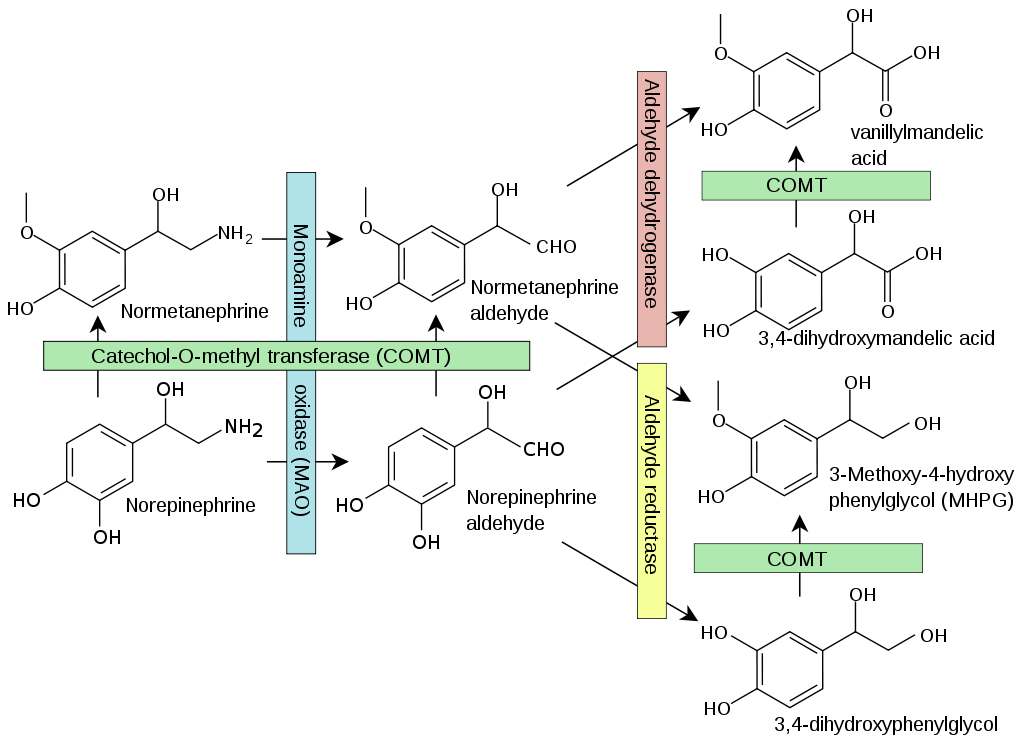
Homovanillic acid (HVC) and Vanillylmandelic acid (VMA)
Homovanillic acid (HVA) is a major catecholamine metabolite that is produced by a consecutive action of monoamine oxidase and catechol-O-methyltransferase on dopamine. Homovanillic acid is used as a reagent to detect oxidative enzymes, and is associated with dopamine levels in the brain. In psychiatry and neuroscience, brain and cerebrospinal fluid levels of…
Isaac Asimov’s Thiotimoline
Thiotimoline is a fictitious chemical compound conceived by American biochemist and science fiction author Isaac Asimov. Isaac Asimov (1920 – 1992) was an American writer and professor of biochemistry at Boston University. During his lifetime, Asimov was considered one of the…
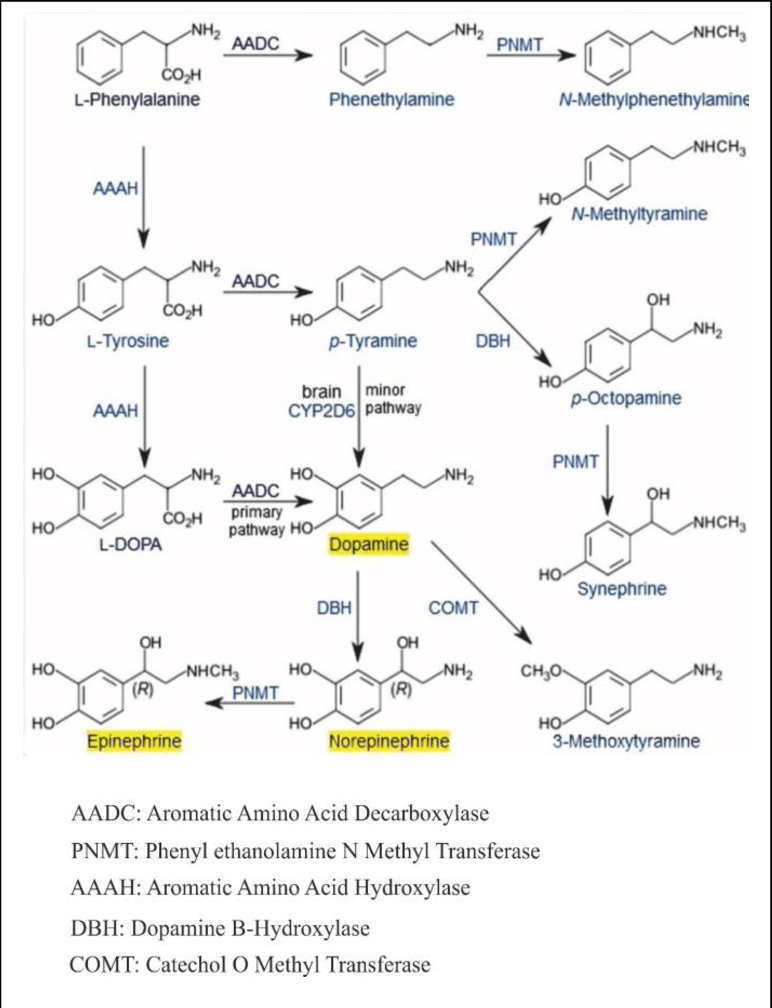
Catecholamine (CA)
A catecholamine (abbreviated CA) is a monoamine neurotransmitter, an organic compound that has a catechol (benzene with two hydroxyl side groups next to each other) and a side-chain amine. Fitzgerald, P. A. (2011). “Chapter 11. Adrenal Medulla and Paraganglia”. In Gardner, D. G.; Shoback,…
Sound-induced convulsions in the hamster associated with magnesium deficiency (1947)
Exposure of 16 hamsters maintained on an Mg deficient diet, 10 animals placed on a control diet immediately after a first convulsive attack, 10 Mg-deficient animals given Mg supplements after…
Magnesium Deficiency Causes a Reversible, Metabolic, Diastolic Cardiomyopathy (2021)
Background Dietary Mg intake is associated with a decreased risk of developing heart failure, whereas low circulating Mg level is associated with increased cardiovascular mortality. We investigated whether Mg deficiency…

The hyperventilation syndrome: a neurosis or a manifestation of magnesium imbalance? (1985)
It has been proven with clinical, psychological and electromyographic tests that the hyperventilation (HV) syndrome cannot be separated from so-called genuine tetany. Tetanic patients with and without HV are characterized…
Latent tetany and anxiety, marginal magnesium deficit, and normocalcemia (1975)
The identification of marginal magnesium deficit, such as we have detected in a patient with anxiety, depression, and psychomatic complaints, is a difficult diagnostic problem. Electromyography of a limb, rendered…
Hypomagnesemic tetany of ruminants (1988)
Hypomagnesemic tetany of ruminants is a noninfectious metabolic disorder that occurs in a wide range of nutritional and management conditions. This article considers its etiology and pathogenesis, clinical signs, clinical…
The magnesium-deficiency tetany syndrome in man (1960)
Magnesium is second only to potassium in abundance as an intracellular cation. The whole body of a human adult contains nearly 25 gm. The numerous important biochemical reactions dependent upon the…
Studies on the nutritional basis of abnormal behavior in albino rats; the effect of pyridoxine deficiency upon sound-induced magnesium tetany (1945)
After a magnesium deficient diet for 5 to 8 days, young rats showed vasodilatation, hyperirritability, and latent tetany. Brief exposures to the sound of a resonated buzzer elicited severe tonic-clonic…