
Silicene is a two-dimensional allotrope of silicon, with a hexagonal honeycomb structure similar to that of graphene
Contrary to graphene, silicene is not flat, but has a periodically buckled topology; the coupling between layers in silicene is much stronger than in multilayered graphene; and the oxidized form…

Weddellite and Whewellite
Weddellite (CaC2O4·2H2O) is a mineral form of calcium oxalate named for occurrences of millimeter-sized crystals found in bottom sediments of the Weddell Sea, off Antarctica. Occasionally, weddellite partially dehydrates to whewellite, forming excellent pseudomorphs of grainy whewellite after…
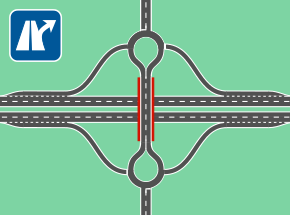
Diamond Interchanges
Dumbbell For the at-grade intersection design analogous to dumbbell and dogbone interchanges, see Bowtie (road). The ramp intersections may also be configured as a pair of roundabouts to create a type of diamond…
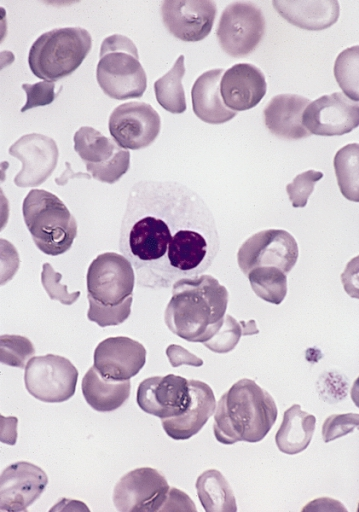
Pelger–Huët anomaly, congenital and acquired, also pince-nez, laminopathy and a little ebola
Pelger–Huët anomaly is a blood laminopathy associated with the lamin B receptor, wherein several types of white blood cells (neutrophils and eosinophils) have nuclei with unusual shape (being bilobed, peanut or dumbbell-shaped instead of the normal trilobed shape) and unusual structure…
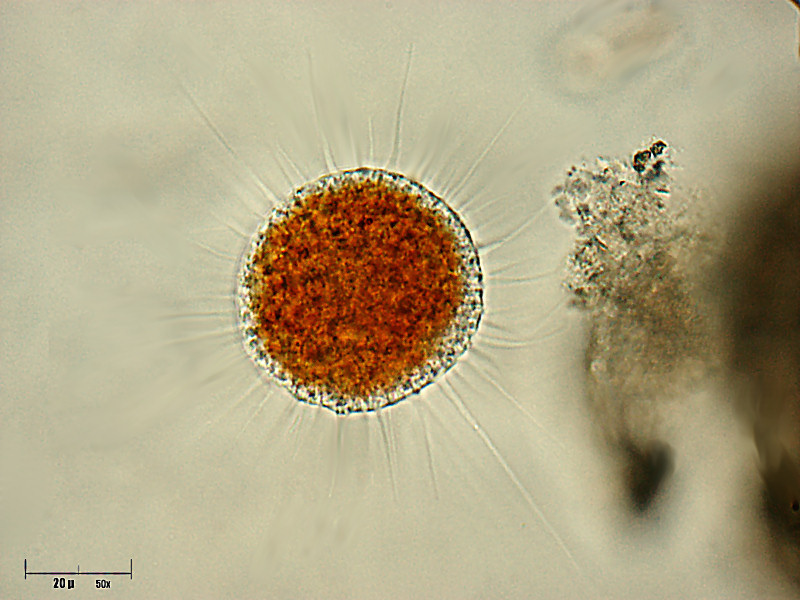
Vampyrella mitosis
Orthomitosis in Vampyrella occurs late in the cyst stage. Neither microtubule organizing centers (MTOCs) nor centrioles are present during mitosis. While in the trophozoite life stage and early cyst stage, the cell is…
Quasiracemate – Racemic mixture
There are four ways to crystallize a racemate; three of which H. W. B. Roozeboom had distinguished by 1899 and this is one of them. QuasiracemateA quasiracemate is a co-crystal of two…
Staphylokinase (SAK) aka staphylococcal fibrinolysin or Müller’s factor
Staphylokinase (SAK; also known as staphylococcal fibrinolysin or Müller’s factor) is a protein produced by Staphylococcus aureus. It contains 136 amino acid residues and has a molecular mass of 15kDa. Synthesis of staphylokinase occurs in late…