
Asherah and Asherim notes
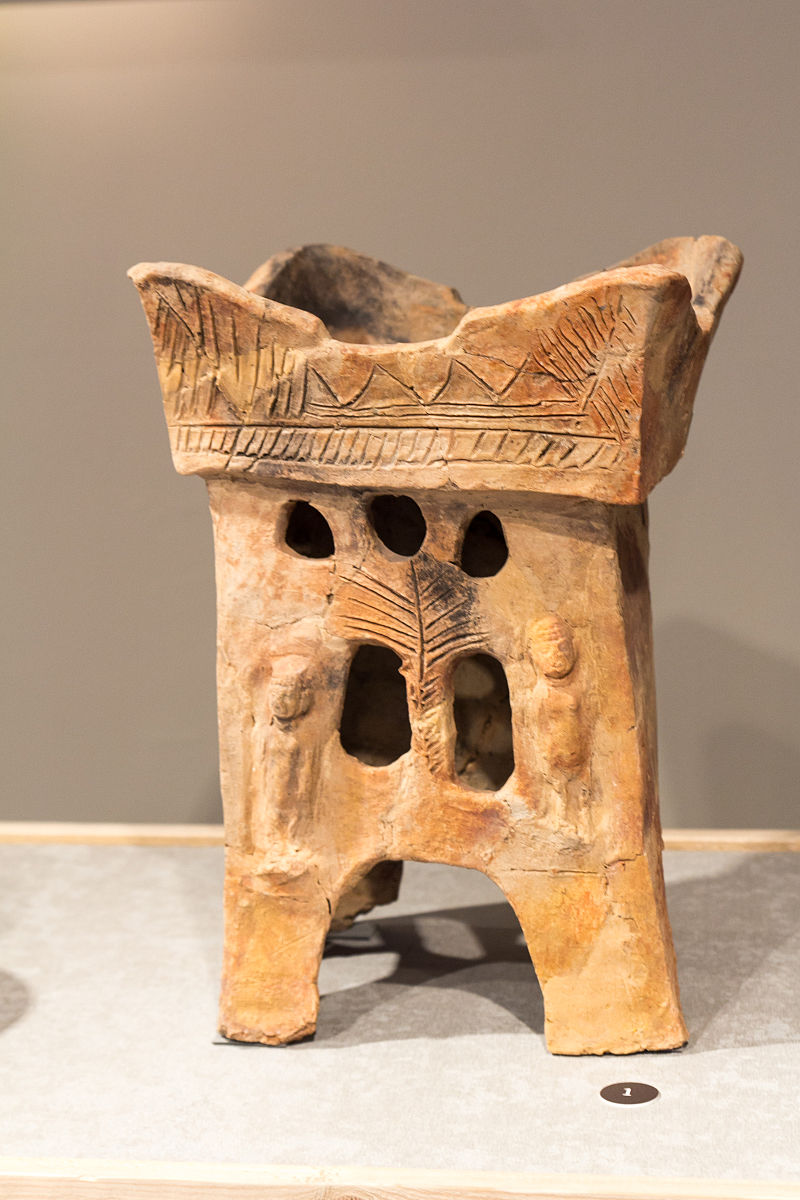
In the ancient Levant, doves were used as symbols for the Canaanite mother goddess Asherah. The Canaanite religion was the group of ancient Semitic religions practiced by the Canaanites living in the ancient Levant from at least the early Bronze Age through the first…
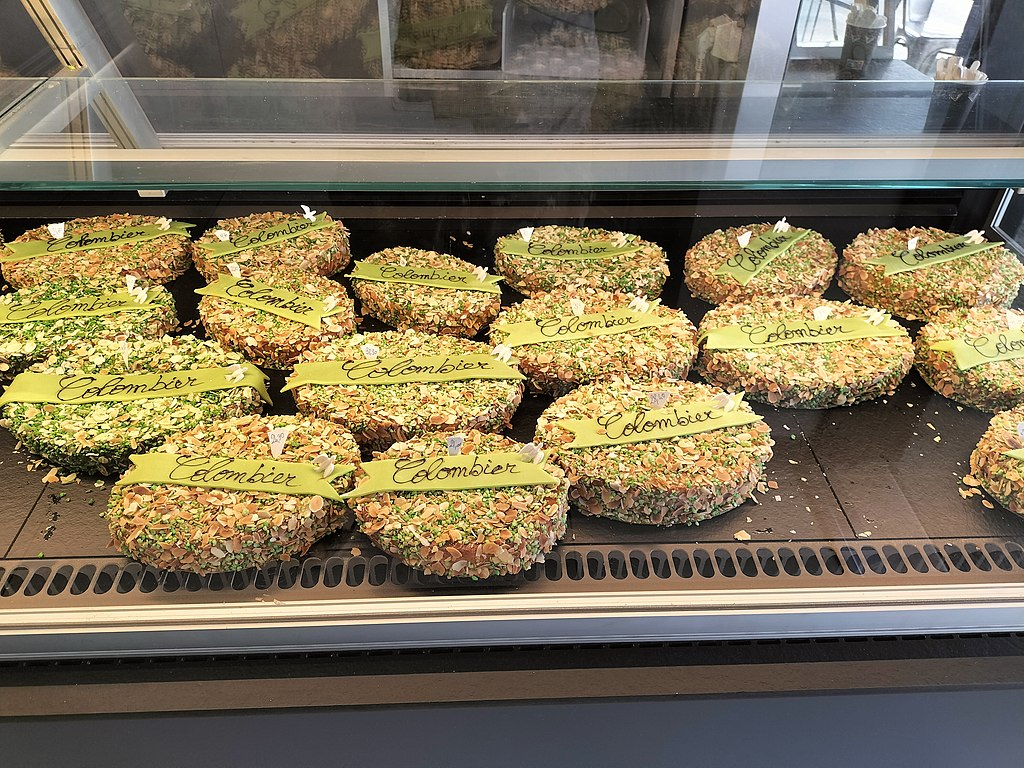
Dovecote cake and the founding myth of Marseille
In Marseille tradition, the dovecote is a cake offered by pastry chefs at the time of Pentecost: cake made from almonds and melon, covered with sugar, generously colored, flavored with kirsch and inside is hidden a dove. This oval-shaped cake…
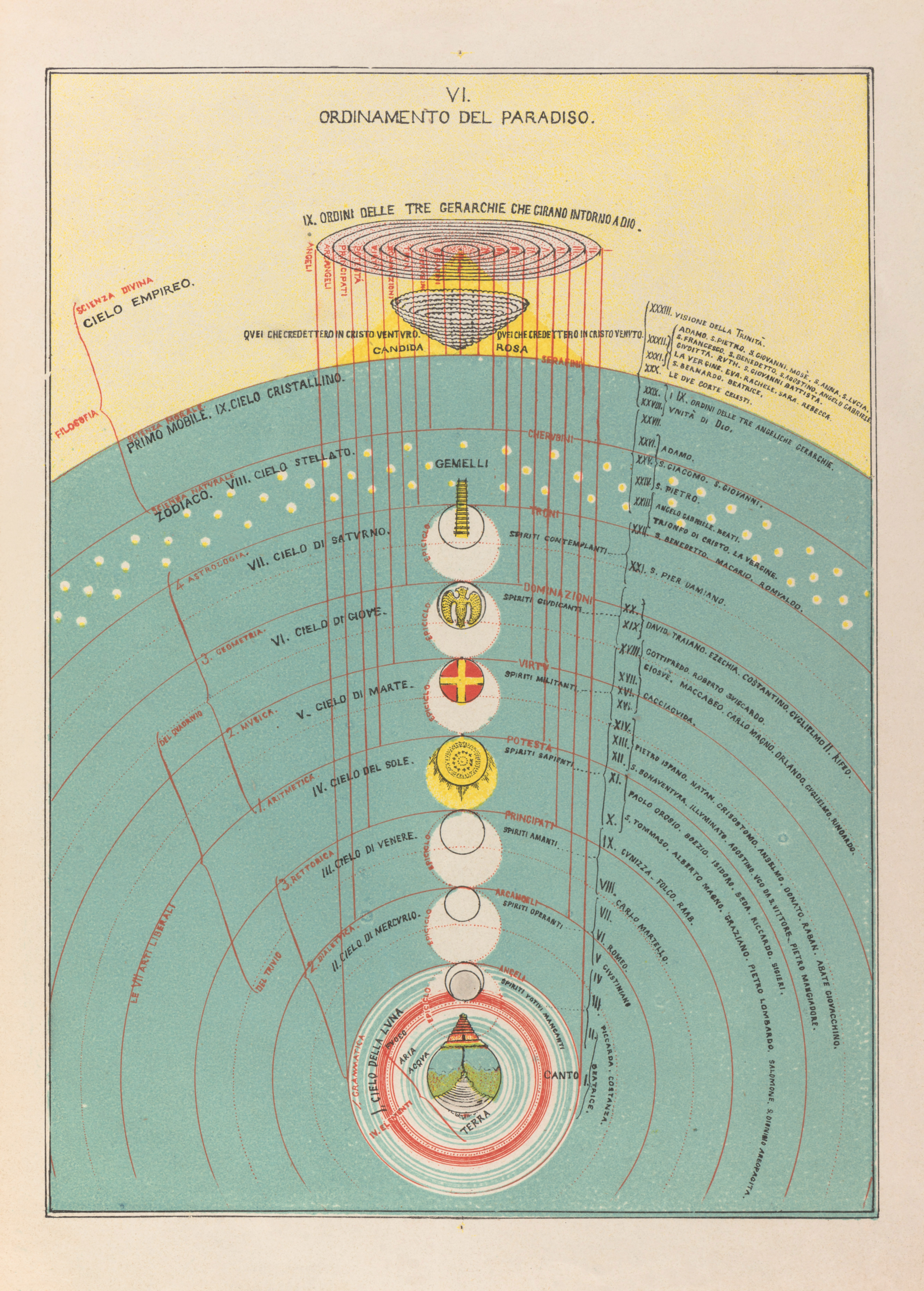
Seven heavens notes
In religious or mythological cosmology, the seven heavens refer to seven levels or divisions of the Heavens. The concept, also found in the ancient Mesopotamian religions, can be found in Judaism, Christianity, and Islam; a similar concept is also…
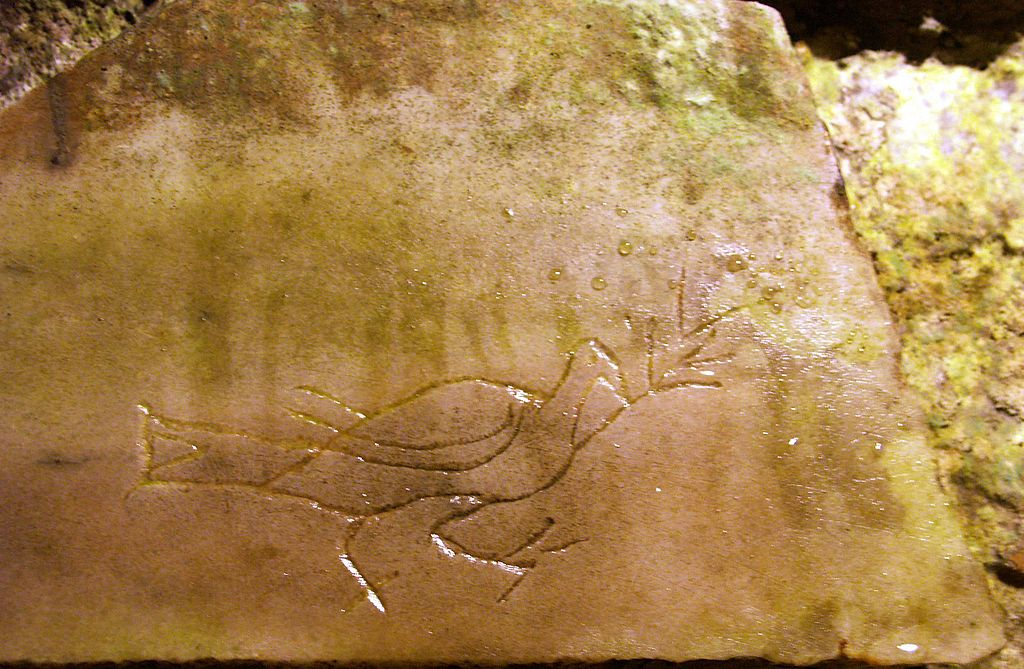
The dove and the raven and the flood notes
According to the biblical story (Genesis 8:11), a dove was released by Noah after the Flood in order to find land; it came back carrying a freshly plucked olive leaf (Hebrew: עלה זית alay zayit),[Gen 8:11] a sign of…
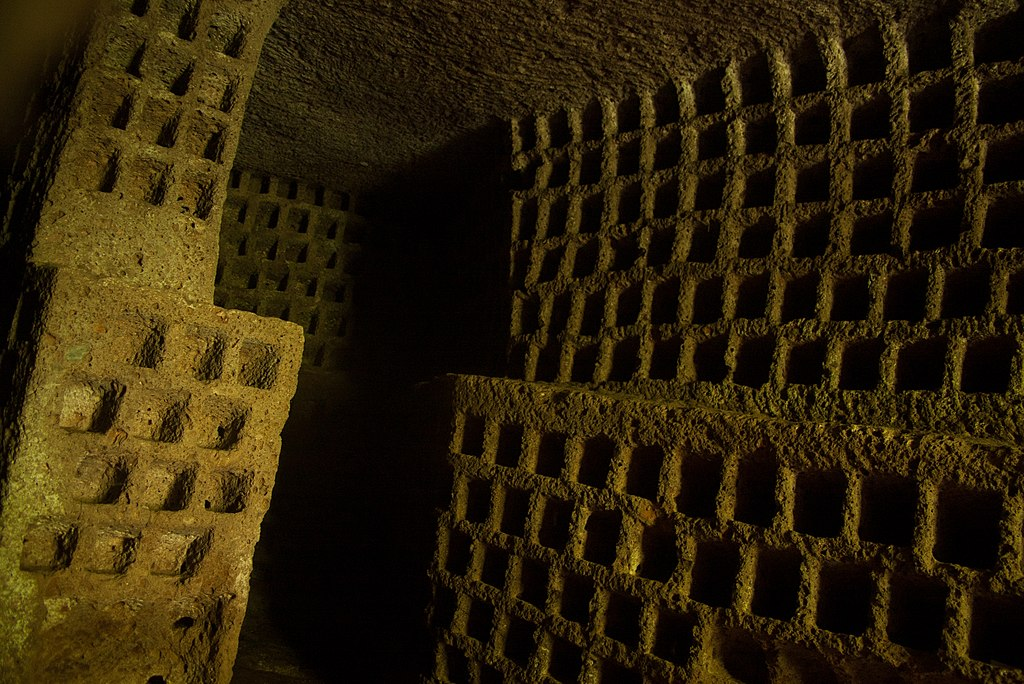
A columbarium is a structure for the reverential and usually public storage of funerary urns holding cremains of the dead
A columbarium (pl. columbaria) is a structure for the reverential and usually public storage of funerary urns holding cremains of the dead. The term comes from the Latin columba (dove) and originally solely referred to compartmentalized housing for doves and…
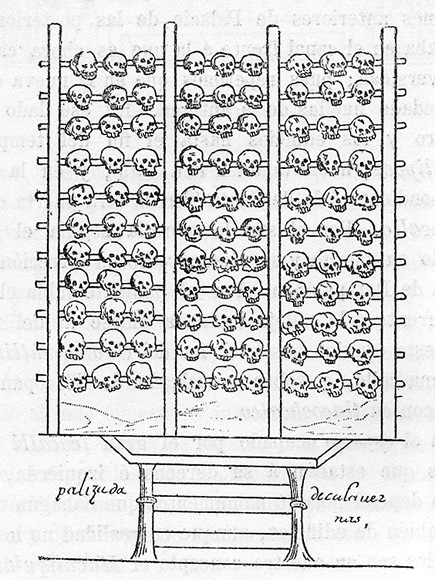
A tzompantli or skull rack was used for the public display of human skulls, typically of war captives or sacrificial victims
A tzompantli (Nahuatl pronunciation: [t͡somˈpant͡ɬi]) or skull rack was a type of wooden rack or palisade documented in several Mesoamerican civilizations, which was used for the public display of human skulls, typically those of war captives or other sacrificial victims. It…
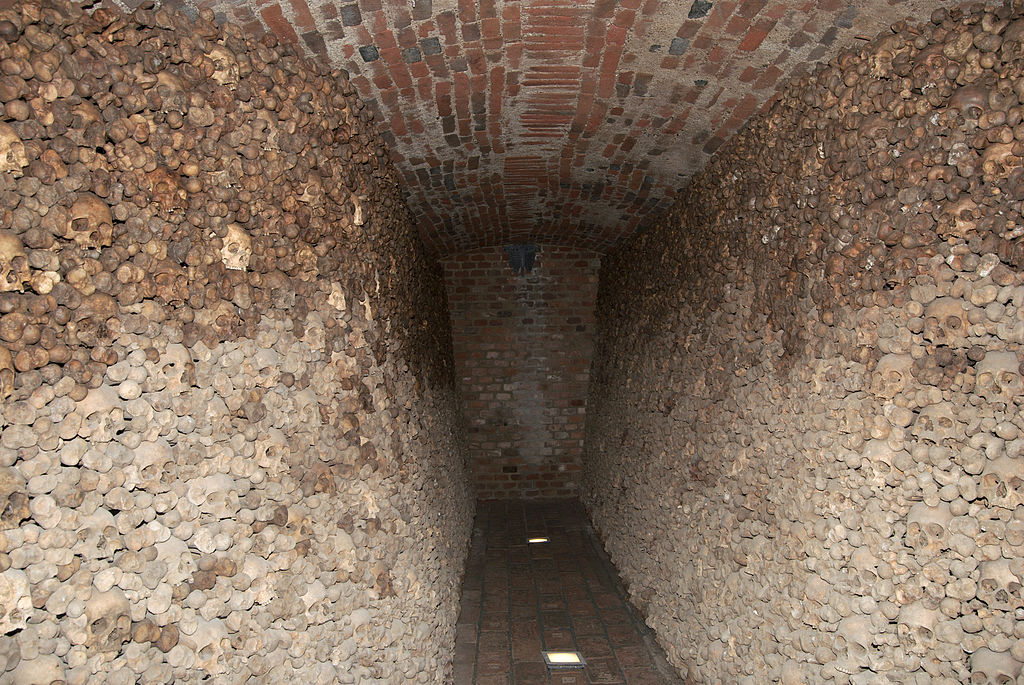
Brno Ossuary holds the remains of over 50 thousand people
Brno Ossuary is an underground ossuary in Brno, Czech Republic. It was rediscovered in 2001 in the historical centre of the city, partially under the Church of St. James. It is estimated that the ossuary holds the…
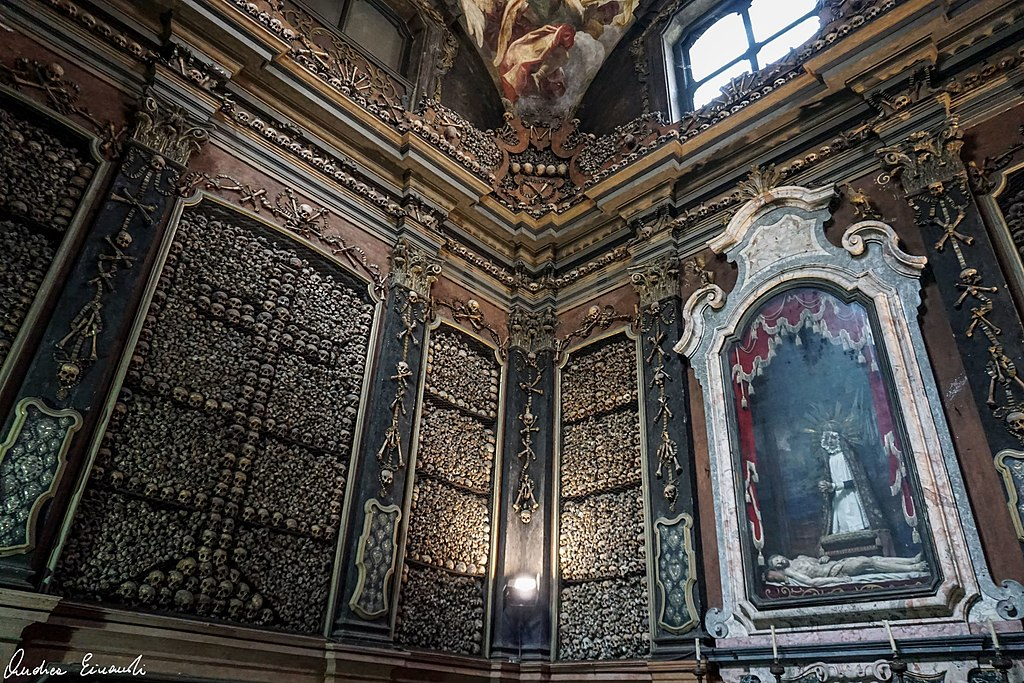
San Bernardino alle Ossa, Milan
San Bernardino alle Ossa is a church in Milan, northern Italy, best known for its ossuary, a small side chapel decorated with numerous human skulls and bones. In 1210, when an adjacent cemetery…
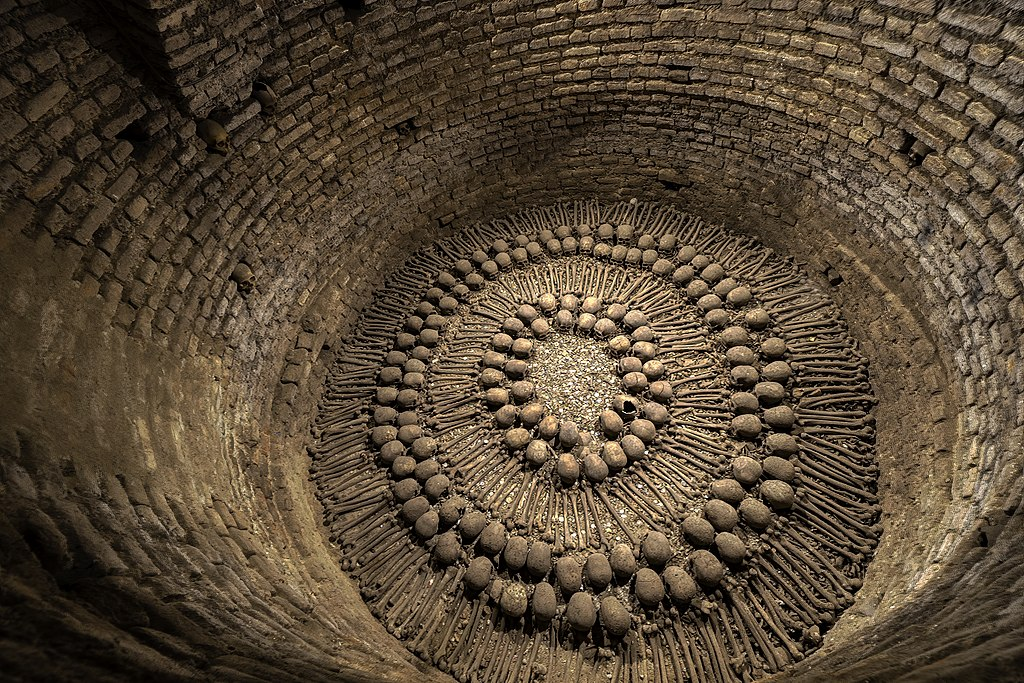
Catacombs of Lima, Peru
The Catacombs of Lima (Spanish: Catacumbas de Lima) are underground ossuaries in the historic centre of Lima, Peru. The catacombs were built under the Basilica and Convent of San Francisco and currently function as a museum. History In 1546, the Franciscan order began construction of the Basilica…
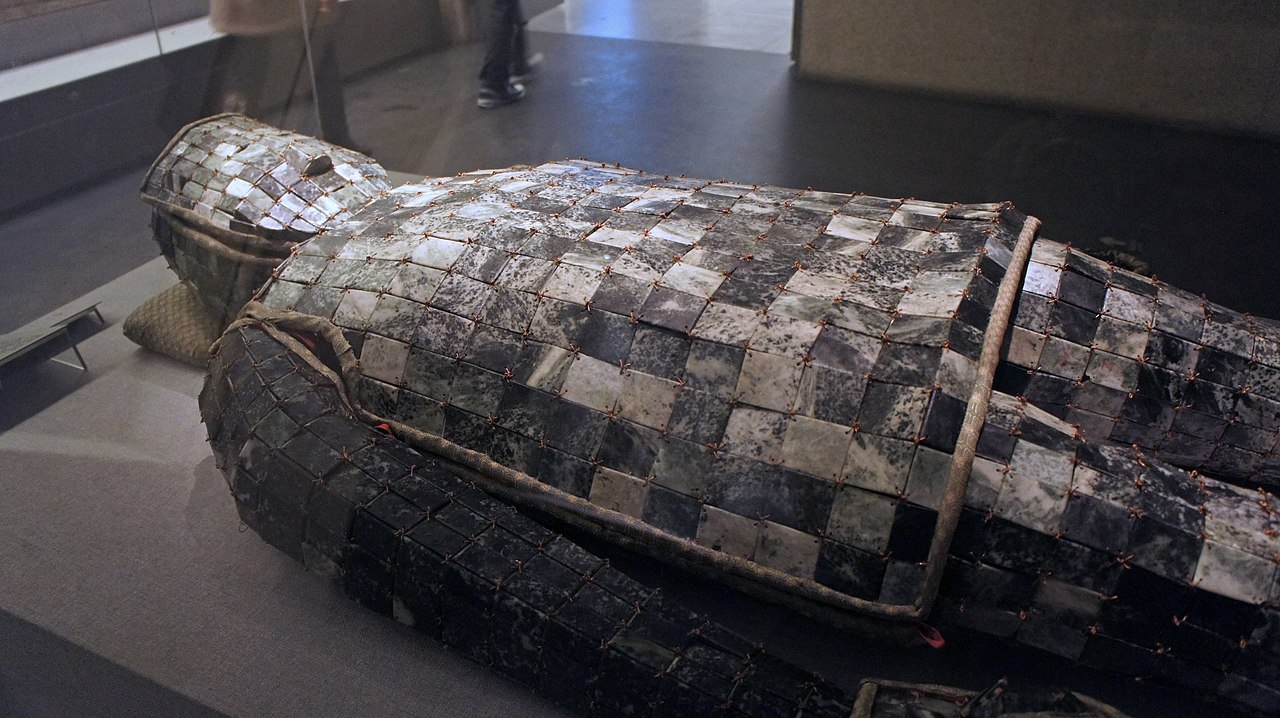
Jade burial suit
A jade burial suit (Chinese: 玉衣; pinyin: yù yī; lit. ‘jade clothing’) is a ceremonial suit made of pieces of jade in which royal members in Han dynasty China were buried. Construction Of the jade suits that have been found, the…
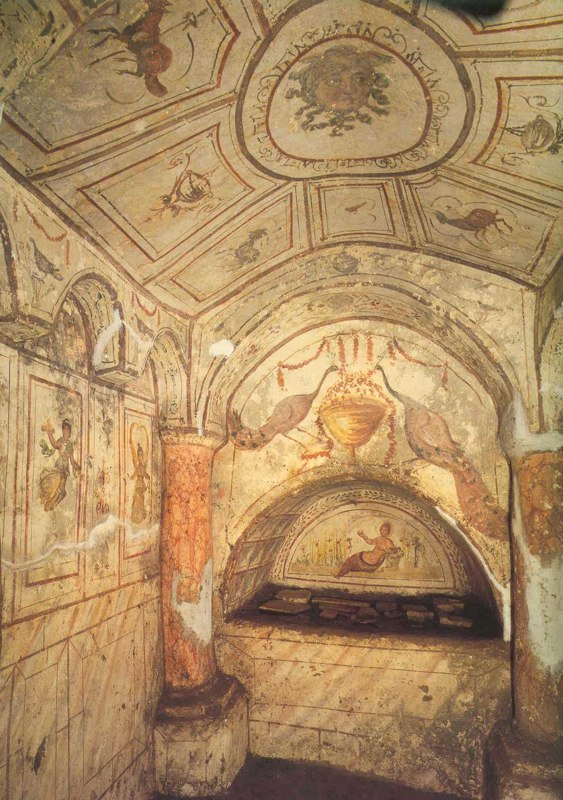
An arcosolium is an arched recess used as a place of entombment
An arcosolium, plural arcosolia, is an arched recess used as a place of entombment. The word is from Latin arcus, “arch”, and solium, “throne” (literally “place of state”) or post-classical “sarcophagus“.[dubious – discuss] Early arcosolia were carved…
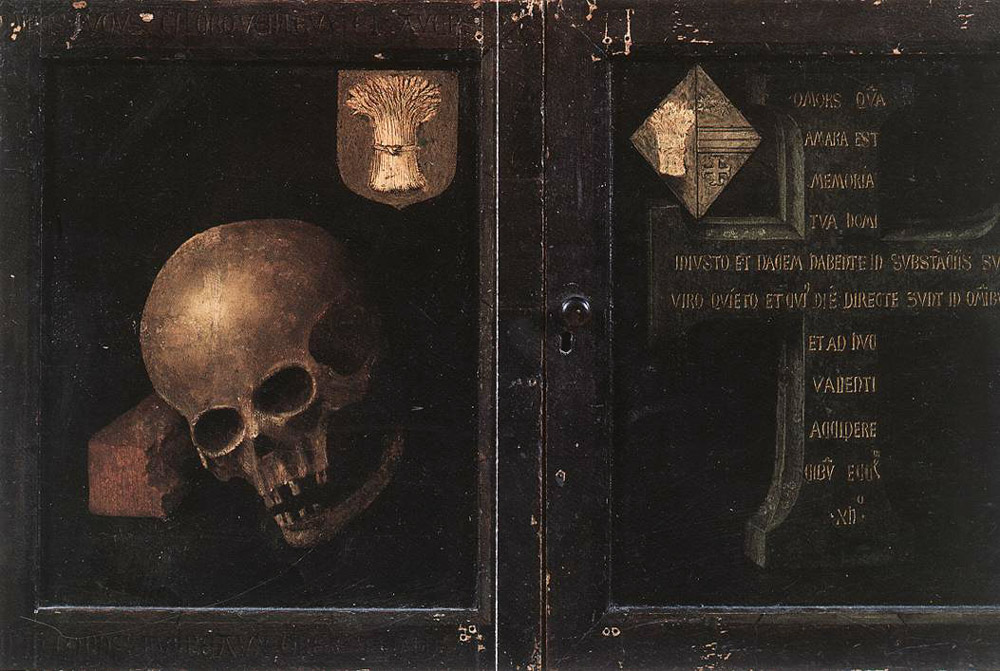
Memento mori (symbolic trope)
Memento mori (Latin for ‘remember that you [have to] die’) is an artistic or symbolic trope acting as a reminder of the inevitability of death. The concept has its roots in the philosophers of classical antiquity and Christianity, and…