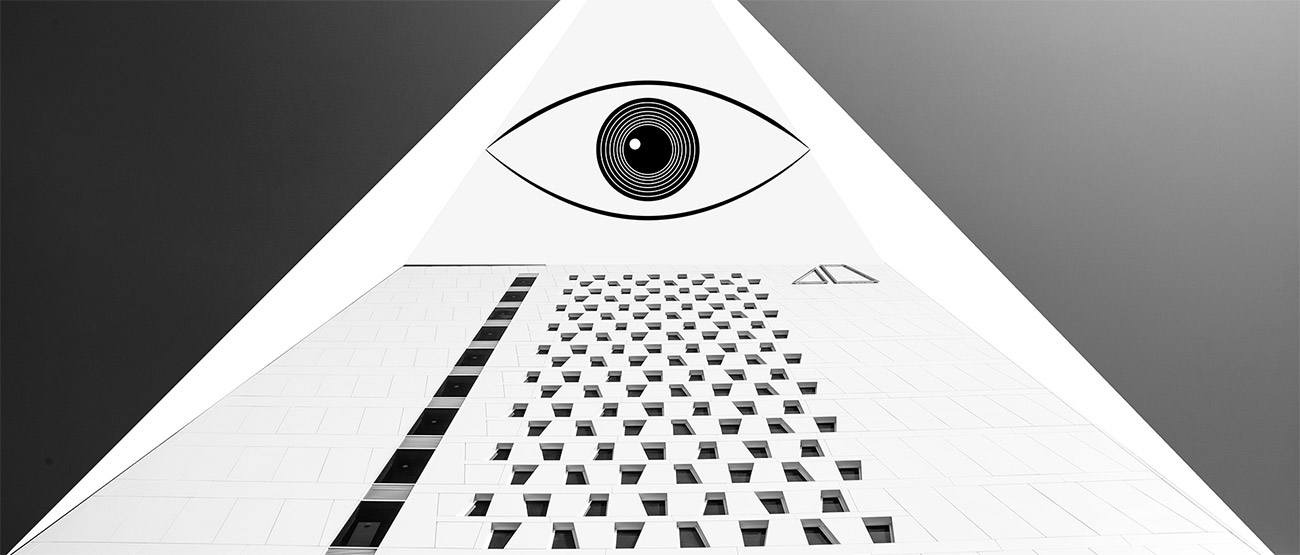

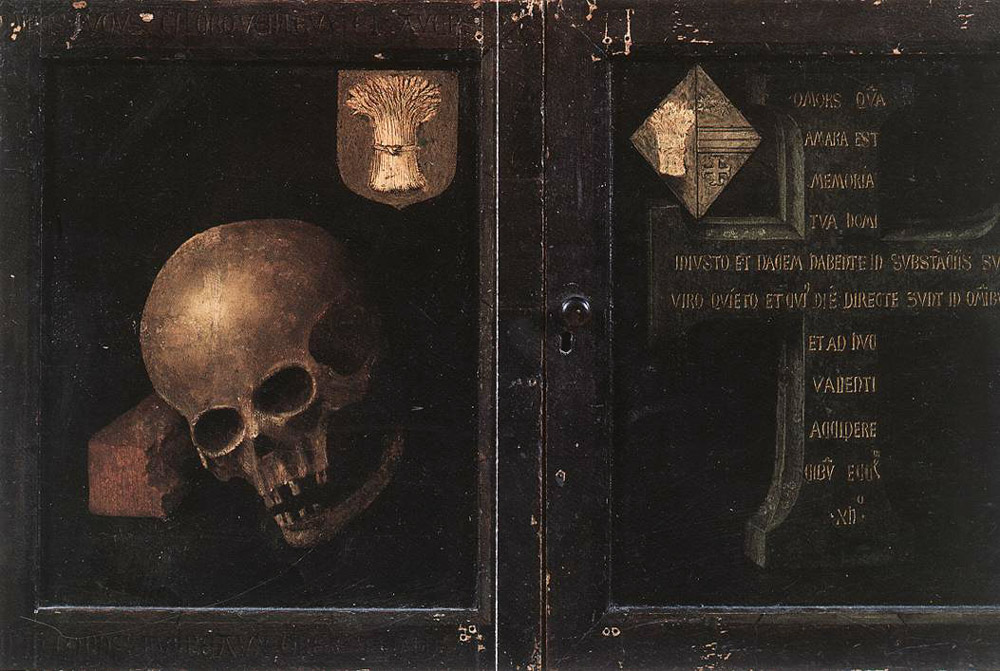
Memento mori (symbolic trope)
Memento mori (Latin for ‘remember that you [have to] die’) is an artistic or symbolic trope acting as a reminder of the inevitability of death. The concept has its roots in the philosophers of classical antiquity and Christianity, and…
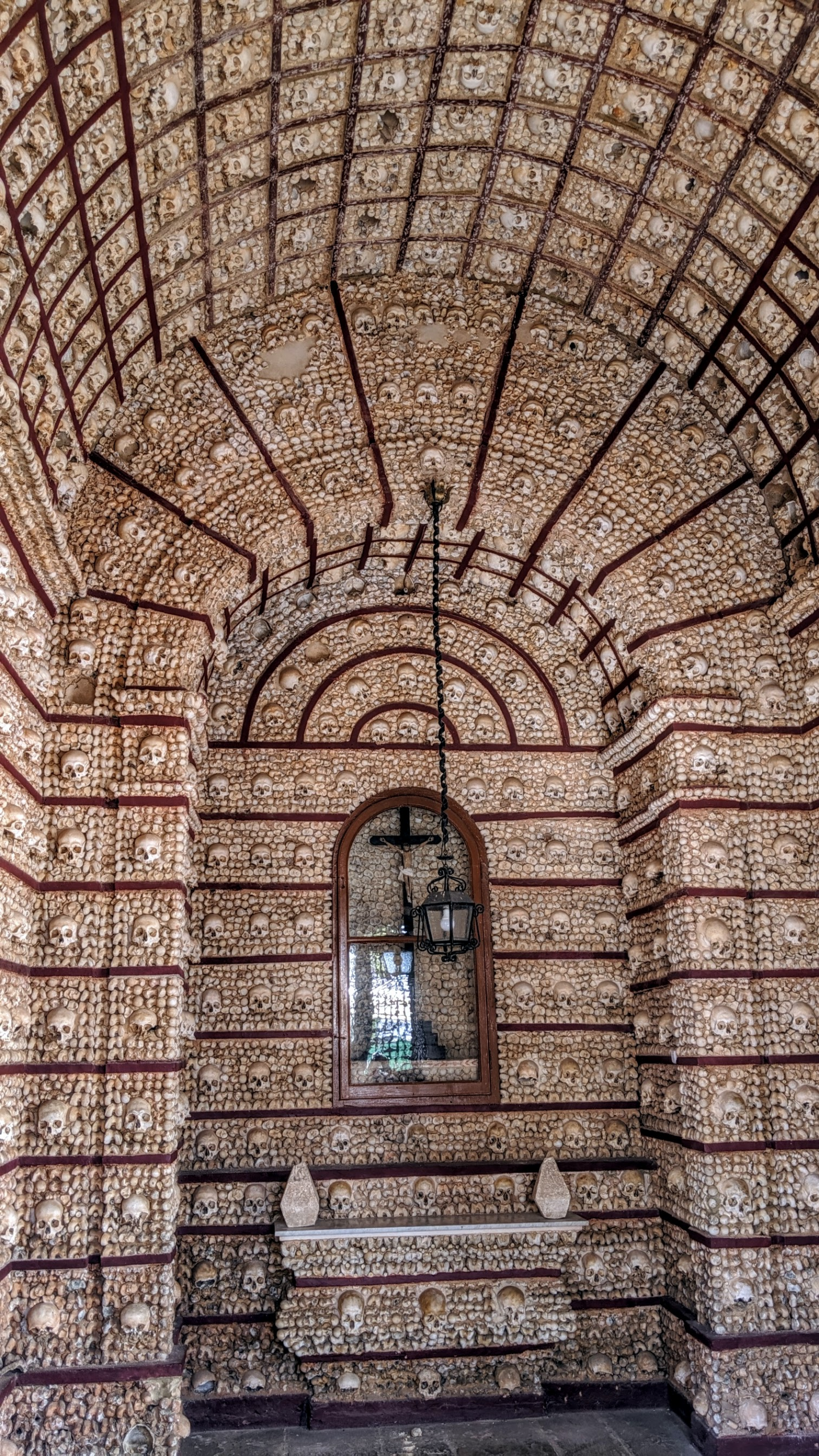
Chapel of Bones (Faro, Portugal)
The Capela dos Ossos (English: Chapel of Bones) is an ossuary chapel in Faro, Portugal, which belongs to the 18th century Carmelite church Nossa Senhora do Carmo. Above the entrance, there is the following inscription: Pára aqui a considerar…
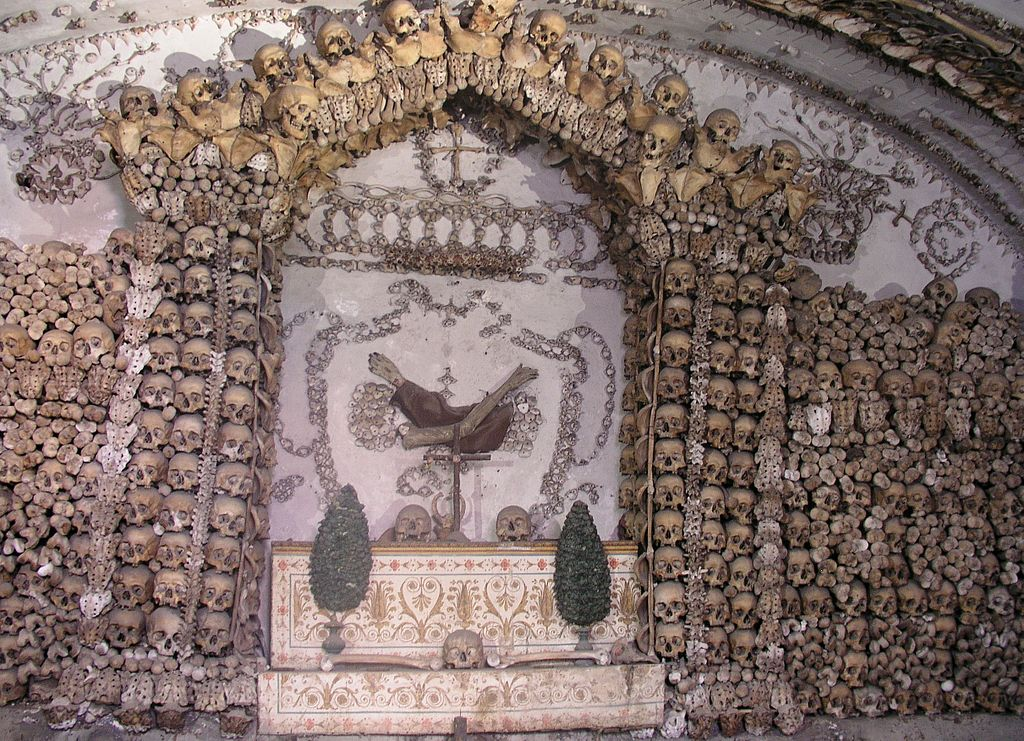
The Capuchin Crypt, Rome
The Capuchin Crypt is a small space comprising several tiny chapels located beneath the church of Santa Maria della Concezione dei Cappuccini on the Via Veneto near Piazza Barberini in Rome, Italy. It contains the skeletal remains of…
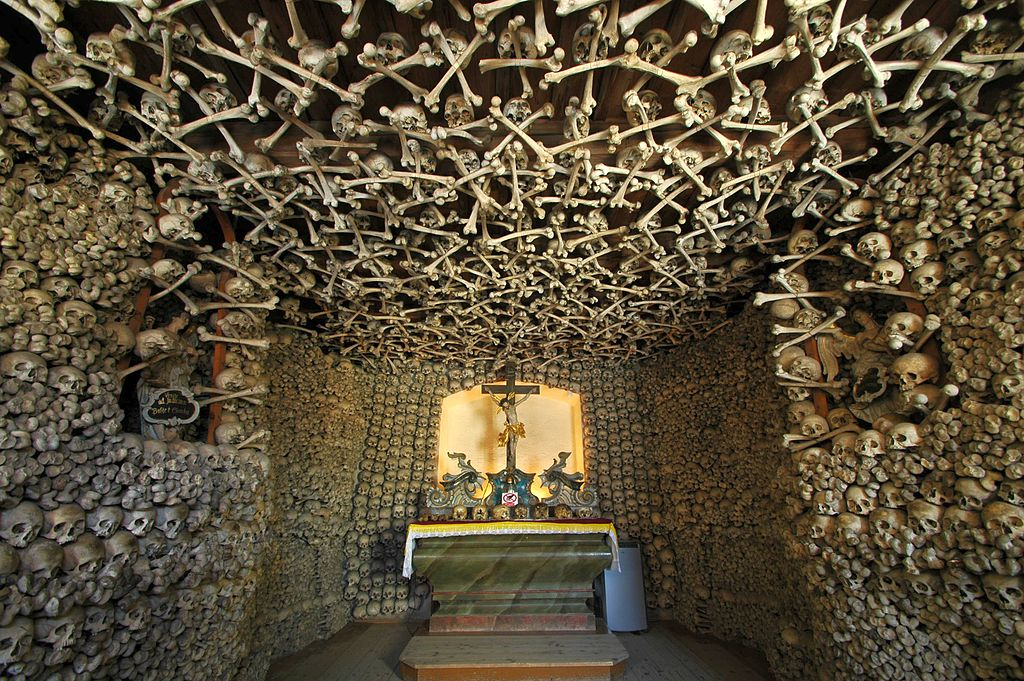
Skull Chapel or St. Bartholomew’s Church is a mass grave in Poland
The Skull Chapel (Polish: Kaplica Czaszek) or St. Bartholomew’s Church, is an ossuary chapel located in the Czermna district of Kudowa-Zdrój, Poland. Built in Baroque style in the last quarter of the 18th century, the temple serves as a mass grave with…
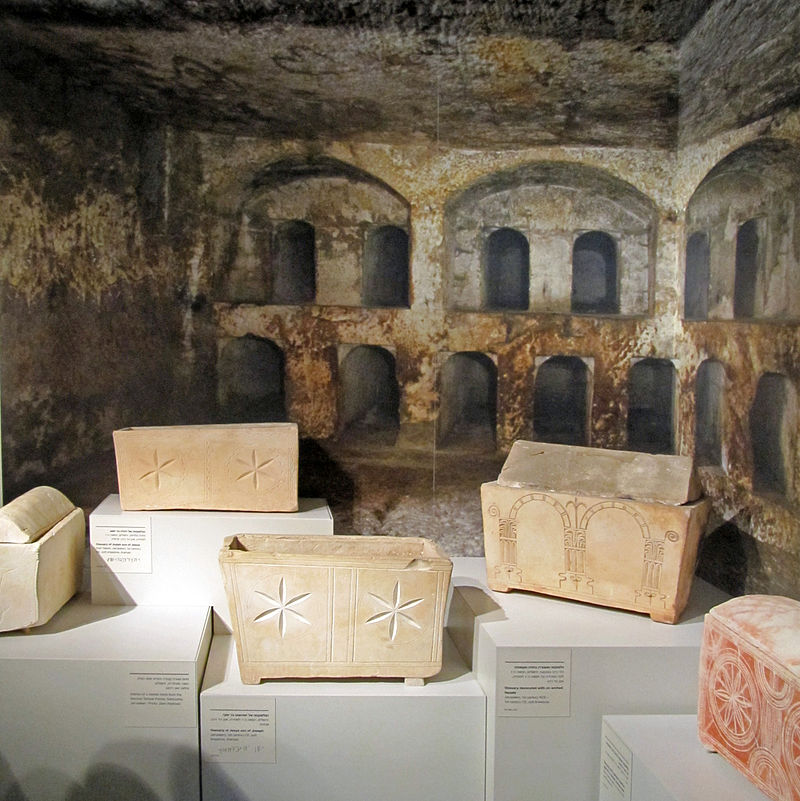
Ossuary
An ossuary is a chest, box, building, well, or site made to serve as the final resting place of human skeletal remains. They are frequently used where burial space is scarce. A body is…
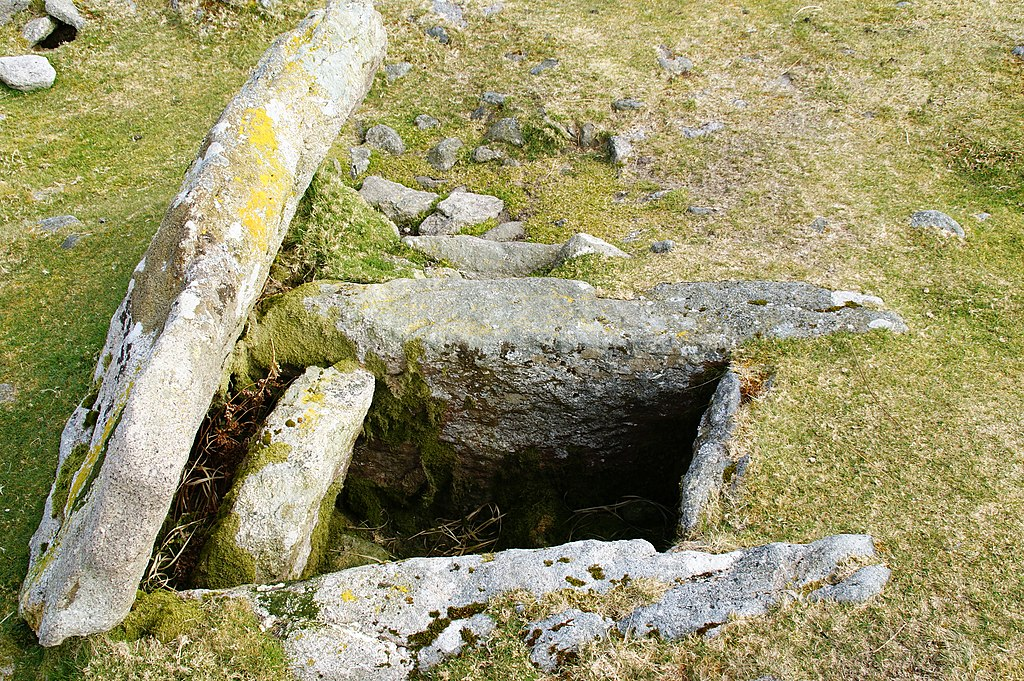
Kist or Cist and Kistivan
A kistvaen or cistvaen is a tomb or burial chamber formed from flat stone slabs in a box-like shape. If set completely underground, it may be covered by a tumulus. The word is derived from the Welsh cist (chest) and maen (stone). The term originated…
Passage graves – neolithic luxury condos for the dead
Imagine you’re a Neolithic farmer with a flair for architecture and a penchant for dramatic burials. What do you build? A passage grave, of course! These stone-age structures are the…

Secondary burial is a feature of prehistoric and historic gravesites which refers to an exhumation and reburial
The secondary burial (German: Nachbestattung or Sekundärbestattung), or “double funeral” (not to be confused with double burial in which two bodies are interred together) is a feature of prehistoric and historic gravesites. The term refers to remains that…
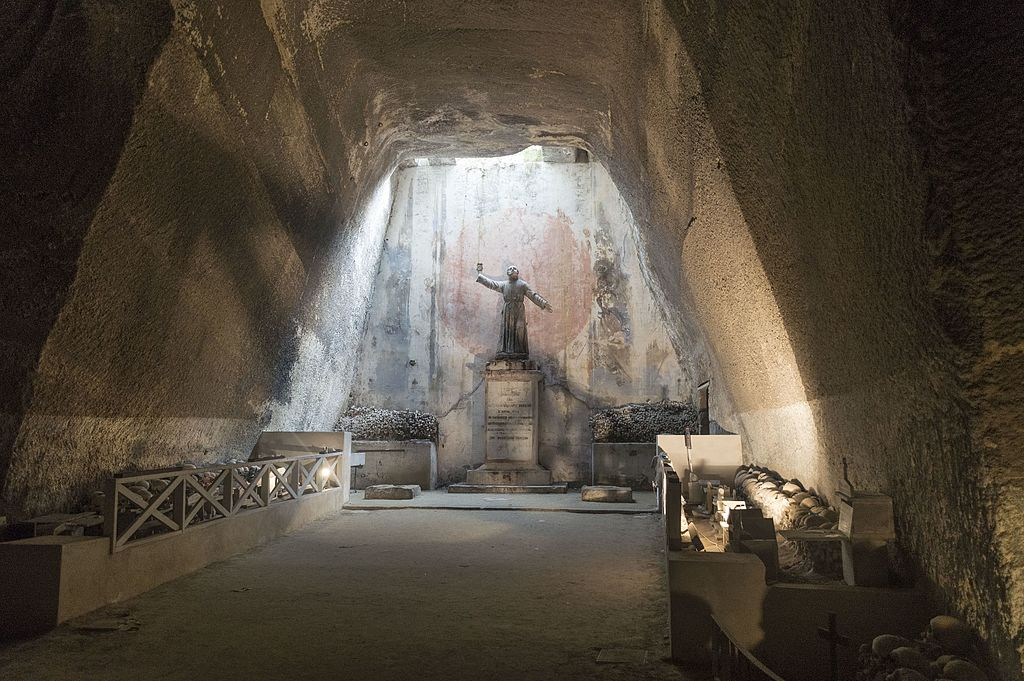
Fontanelle cemetery in Naples
The Fontanelle cemetery in Naples is a charnel house, an ossuary, located in a cave in the tuff hillside in the Materdei section of the city. It is associated with a chapter in the folklore of the city.…
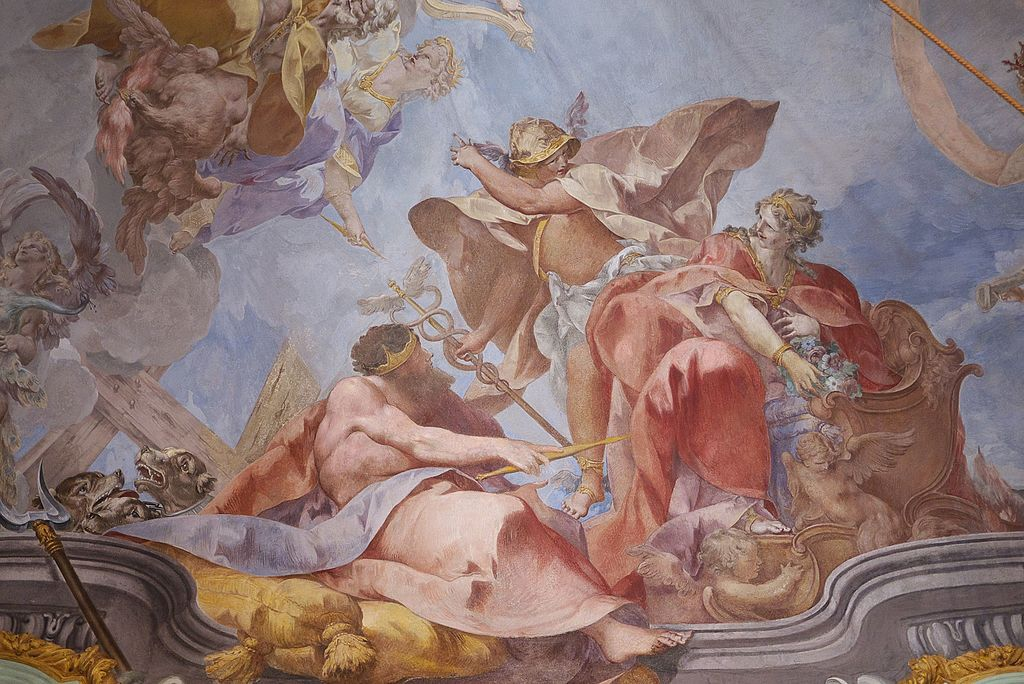
Dis Pater aka Rex Infernus, Roman god of the underworld, contracted from Dives Pater (“Father of Riches”)
Dīs Pater (Dītis Patris), otherwise known as Rex Infernus or Pluto, is a Roman god of the underworld. Dis was originally associated with fertile agricultural land and mineral wealth, and since those minerals came from underground, he was later equated with…
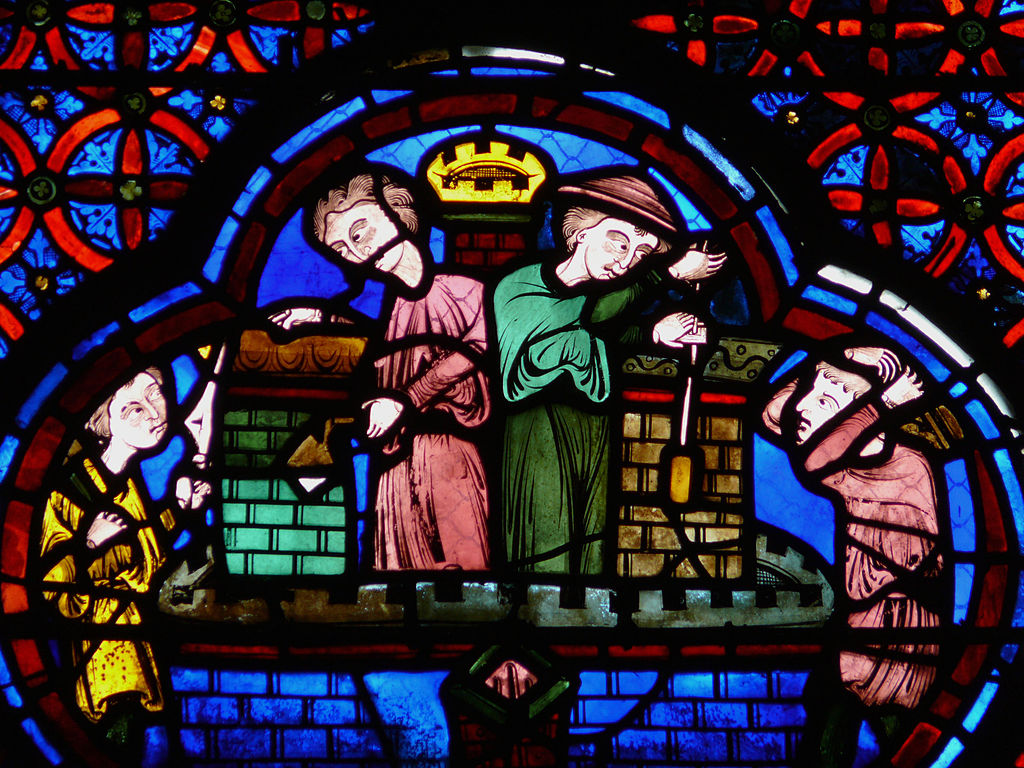
The rich man and Lazarus aka the parable of Dives and Lazarus
The rich man and Lazarus (also called the parable of Dives and Lazarus) is a parable of Jesus from the 16th chapter of the Gospel of Luke. Speaking to his disciples and some Pharisees, Jesus tells of an unnamed rich man and a…
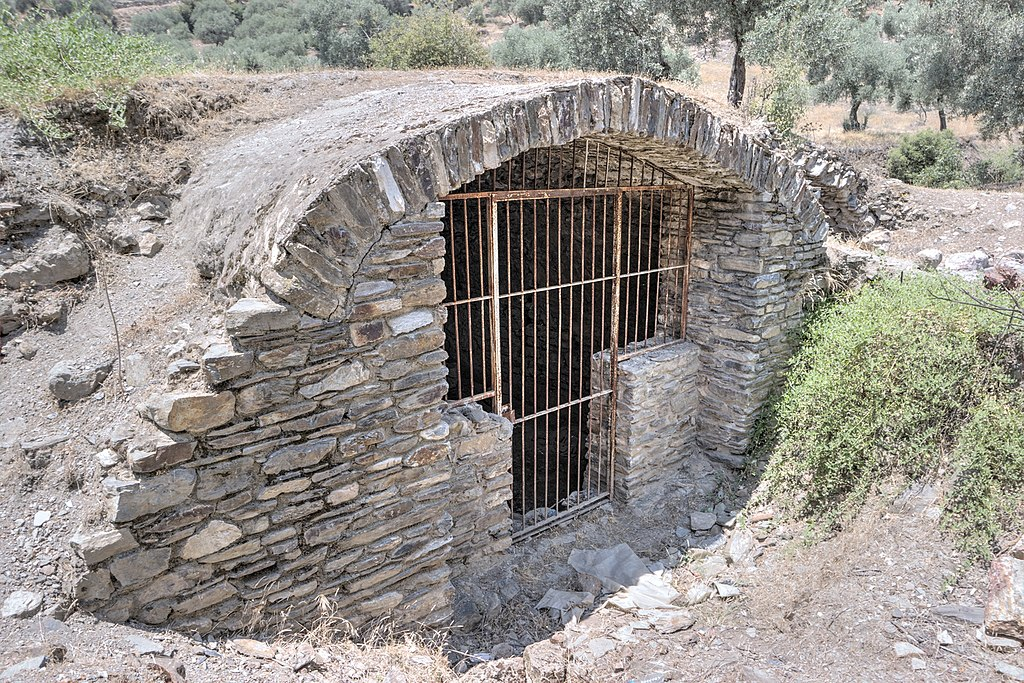
Acharaca was a village of ancient Lydia with a Ploutonion or a temple of Pluto and a cave named Charonium
Acharaca was a village of ancient Lydia, Anatolia on the road from Tralles (modern Aydın, Turkey) to Nysa on the Maeander, with a Ploutonion or a temple of Pluto, and a cave, named Charonium (Ancient Greek: Χαρώνειον άντρον), where the…