

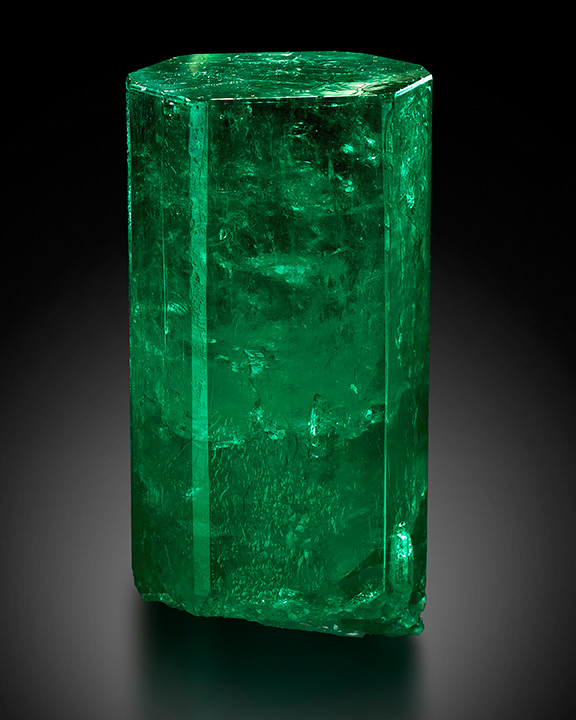
Hexagonal – Hexagonal prism (six-sided)
Common examples include: emerald, galena, quartz, hanksite, vanadinite
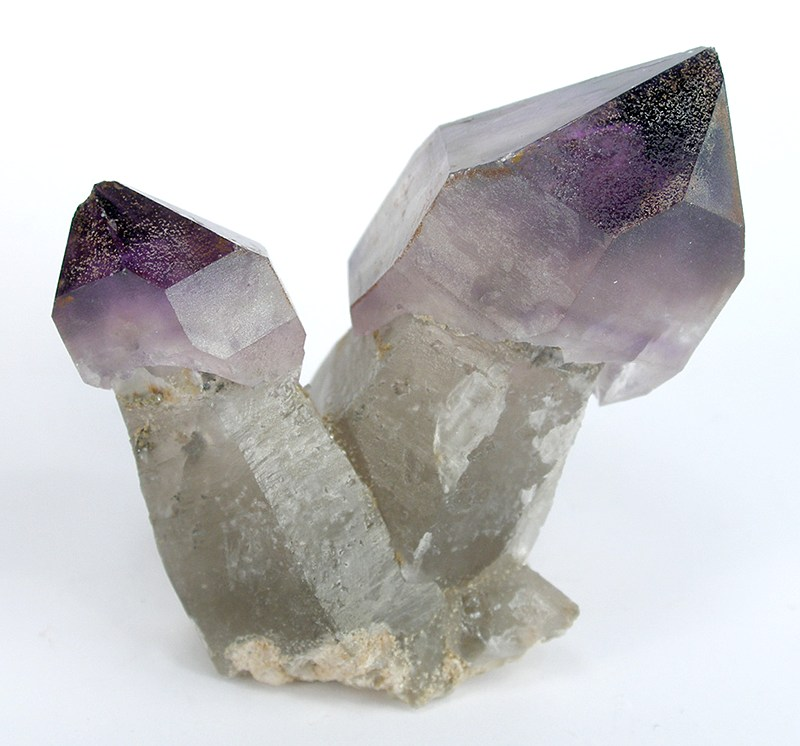
Sceptered – Crystal growth stops and continues at the top of the crystal, but not at the bottom
Common examples include: hedenbergite, quartz
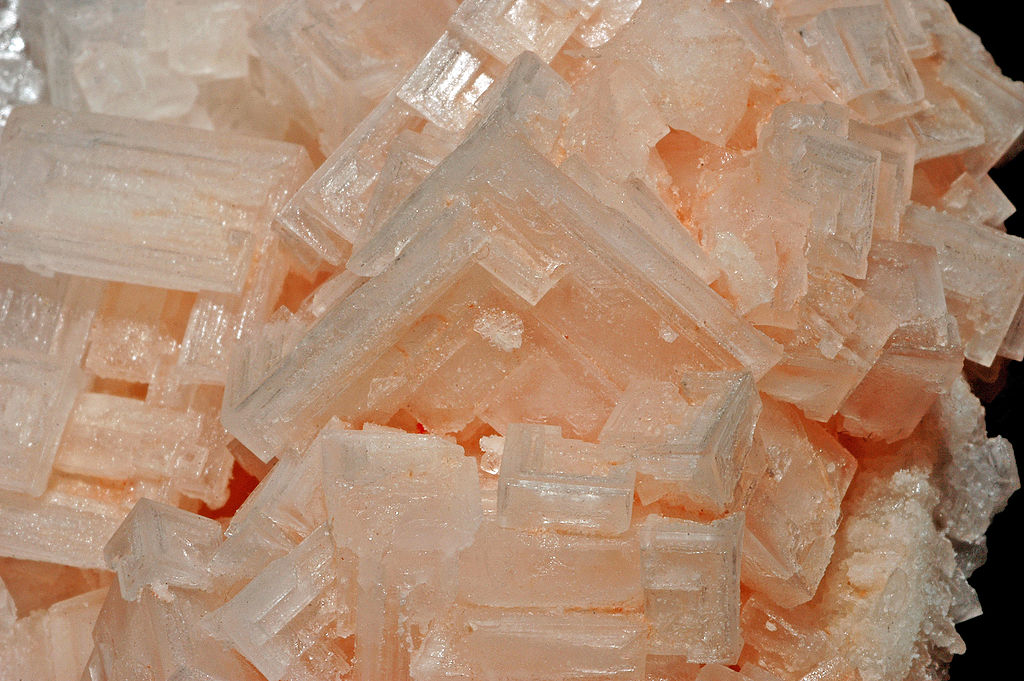
Hopper – Like cubic, but outer portions of cubes grow faster than inner portions creating a concavity
Common examples include: halite, calcite, synthetic bismuth A hopper crystal is a form of crystal, the shape of which resembles that of a pyramidal hopper container. The edges of hopper crystals are fully developed, but the interior spaces are not filled in. This results i
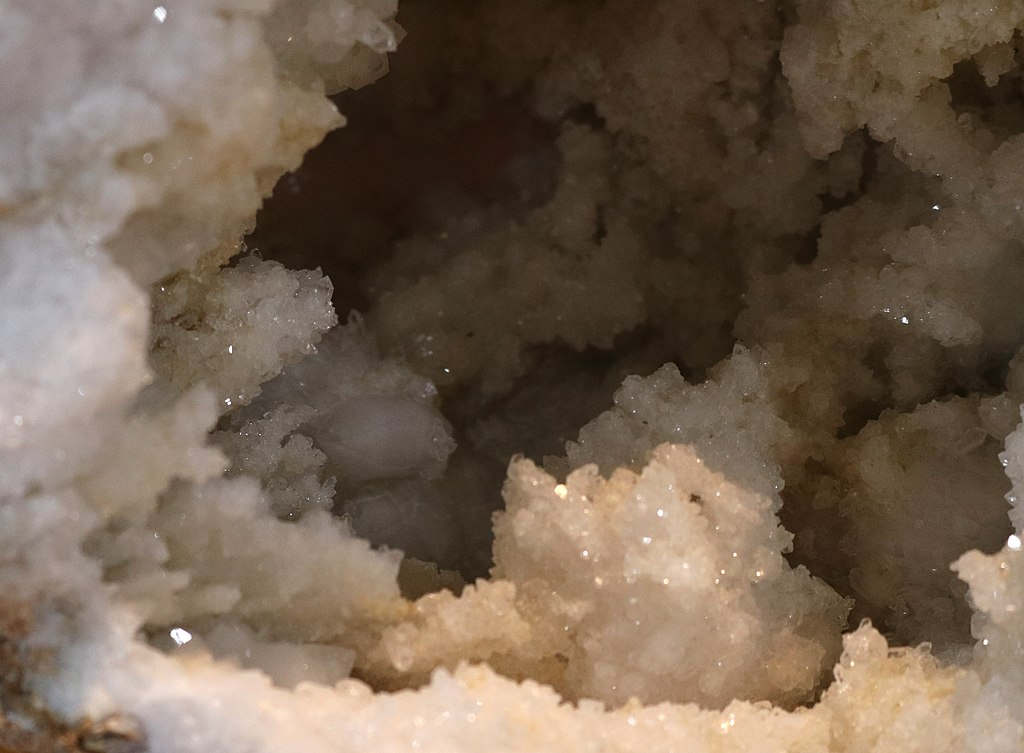
Granular – Aggregates of diminute anhedral crystals in matrix or other surface
Common examples include: andradite, bornite, scheelite, quartz
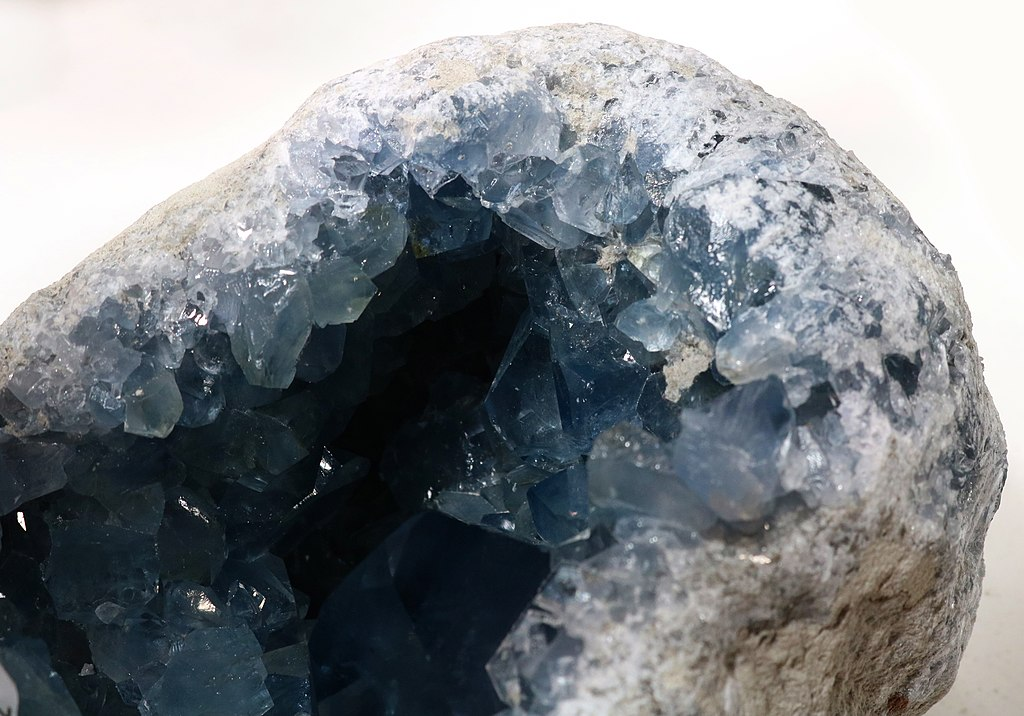
Druse, encrustation – Aggregate of crystals coating a surface or cavity, usually found in geodes
Common examples: azurite, celestine, calcite, uvarovite, malachite, quartz In geology, druse refers to a coating of fine crystals on a rock fracture surface or vein or within a vug or geode. See also References
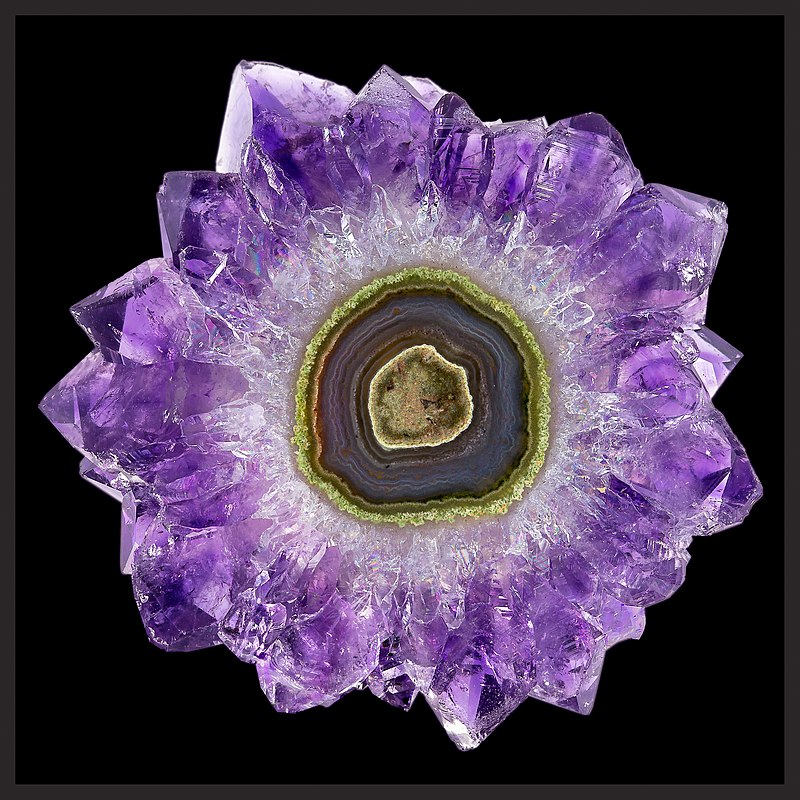
Concentric – Circular ring aggregates around a center
This habit is found in cross-sections from reniform/mamillary habits, and also from elongated stalactites of amethyst (quartz), malachites, rhodocrosite, and others Common examples include: quartz, malachite, rhodocrosite
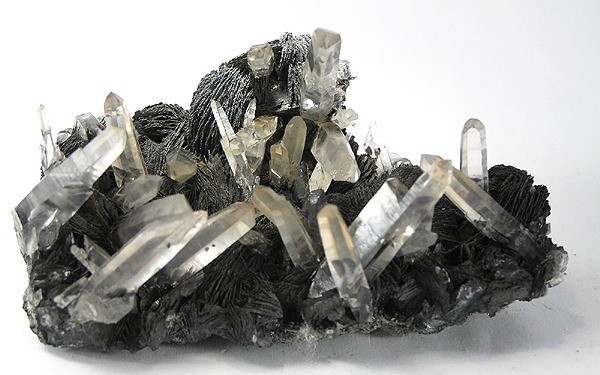
Bladed – Blade-like ends, slender and somewhat flattened
Common examples: quartz, stilbite, kyanite
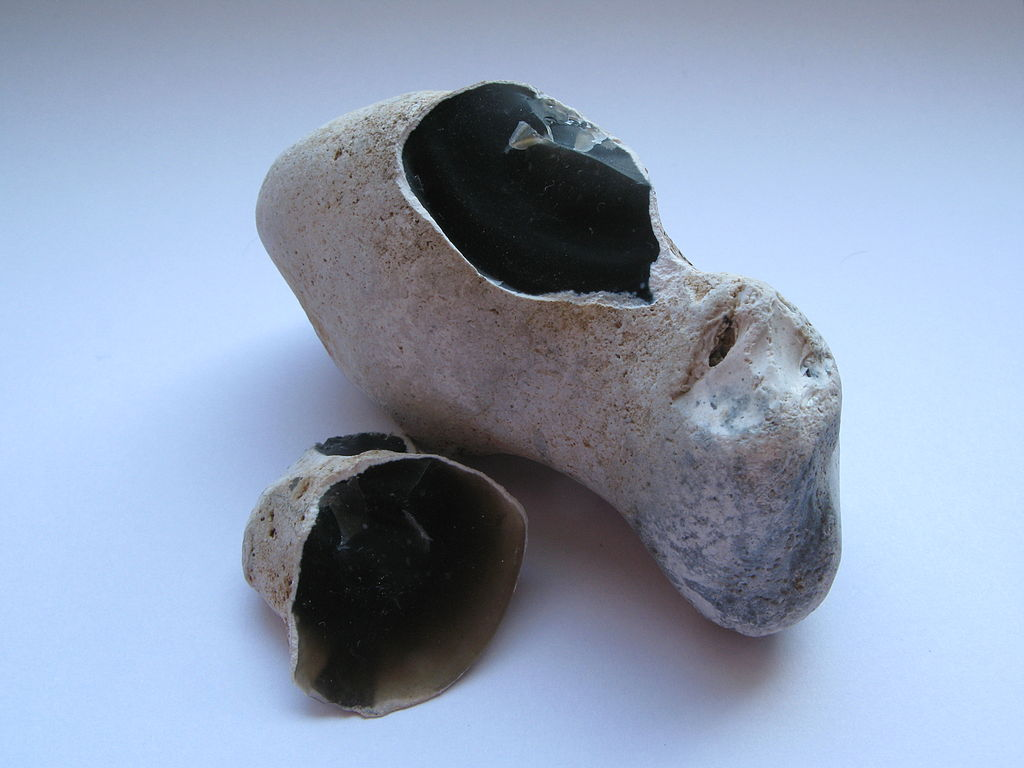
Chert
Chert is a hard, fine-grained sedimentary rock composed of microcrystalline or cryptocrystalline quartz, the mineral form of silicon dioxide (SiO2). Chert is characteristically of biological origin, but may also occur inorganically as a chemical