Nutrition
-
🌾🕊️ Freedom Farms: A Systems‑Biology Framework for Terrain‑Sovereign Agriculture
Industrial agriculture is often described as efficient and modern, but from a systems‑biology perspective it disrupts the biochemical, microbial, and ecological relationships that once made food resilient. These relationships between… Read more.
-
Lumiflavin and Lumichrome notes (and something called Autochrome)
Lumiflavin is a toxic product of photolysis of vitamin B2. Lumiflavin is a compound showing yellow-green fluorescence, formed by a photolysis of riboflavin in alkaline solution. Lumiflavin 1948-Present Lumichrome 1944-Present The Autochrome Lumière was an early color photography process patented in 1903 by… Read more.
-
Latent tetany and anxiety, marginal magnesium deficit, and normocalcemia (1975)
The identification of marginal magnesium deficit, such as we have detected in a patient with anxiety, depression, and psychomatic complaints, is a difficult diagnostic problem. Electromyography of a limb, rendered… Read more.
-
Hypomagnesemic tetany of ruminants (1988)
Hypomagnesemic tetany of ruminants is a noninfectious metabolic disorder that occurs in a wide range of nutritional and management conditions. This article considers its etiology and pathogenesis, clinical signs, clinical… Read more.
-
The magnesium-deficiency tetany syndrome in man (1960)
Magnesium is second only to potassium in abundance as an intracellular cation. The whole body of a human adult contains nearly 25 gm. The numerous important biochemical reactions dependent upon the… Read more.
-
Studies on the nutritional basis of abnormal behavior in albino rats; the effect of pyridoxine deficiency upon sound-induced magnesium tetany (1945)
After a magnesium deficient diet for 5 to 8 days, young rats showed vasodilatation, hyperirritability, and latent tetany. Brief exposures to the sound of a resonated buzzer elicited severe tonic-clonic… Read more.
-
Experts warn of fatty liver disease ‘epidemic’ in young people
In Bristol University‘s study Children of the 90s, 2.5% of 4,000 people born in 1991 and 1992 were found by ultrasound scanning at the age of 18 to have non-alcoholic fatty liver disease;… Read more.
-
Aetokthonotoxin (AETX) aka ‘eagle toxin’ discovered in 2021
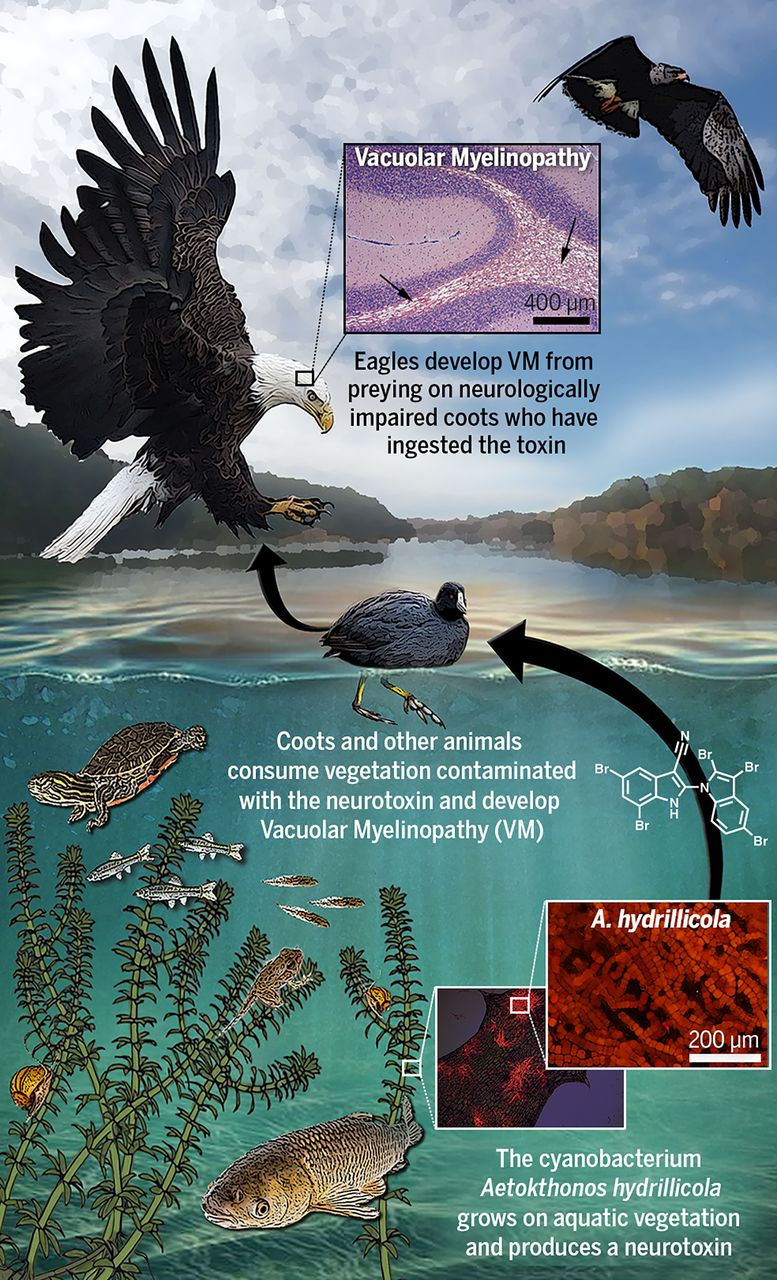
Aetokthonotoxin (AETX), colloquially ‘eagle toxin’, was discovered in 2021 as the cyanobacterial neurotoxin causing vacuolar myelinopathy (VM) in eagles in North America. Avian vacuolar myelinopathy (AVM) is a fatal neurological disease that affects various waterbirds and raptors. It is most common… Read more.
-
β-Methylamino-L-alanine, or BMAA
β-Methylamino-L-alanine, or BMAA, is a non-proteinogenic amino acid produced by cyanobacteria. BMAA is a neurotoxin and its potential role in various neurodegenerative disorders is the subject of scientific research. Structure and properties BMAA is a derivative of the amino acid alanine with a… Read more.
-
Lytico-bodig disease, Guam disease, or amyotrophic lateral sclerosis-parkinsonism-dementia (ALS-PDC) is a neurodegenerative disease or all of them
Lytico-bodig (also Lytigo-bodig) disease, Guam disease, or amyotrophic lateral sclerosis-parkinsonism-dementia (ALS-PDC) is a neurodegenerative disease of uncertain etiology endemic to the Chamorro people of the island of Guam in Micronesia. Lytigo and bodig are Chamorro language words for two different manifestations of the same condition. ALS-PDC, a term coined by Asao Hirano and colleagues… Read more.