Tryptophan
-
Complement control protein are proteins that interact with components of the complement system
The complement system is tightly regulated by a network of proteins known as “regulators of complement activation (RCA)” that help distinguish target cells as “self” or “non-self.” A subset of this family… Read more.
-
Erich Traub (1906 – 1985) German veterinarian, scientist and virologist who specialized in foot-and-mouth disease, Rinderpest and Newcastle disease
Erich Traub worked directly for Heinrich Himmler, head of the Schutzstaffel (SS), as the lab chief of the Nazis’ leading bio-weapons facility on Riems Island. Note: Riems is home to the oldest virological research institution in the world,… Read more.
-
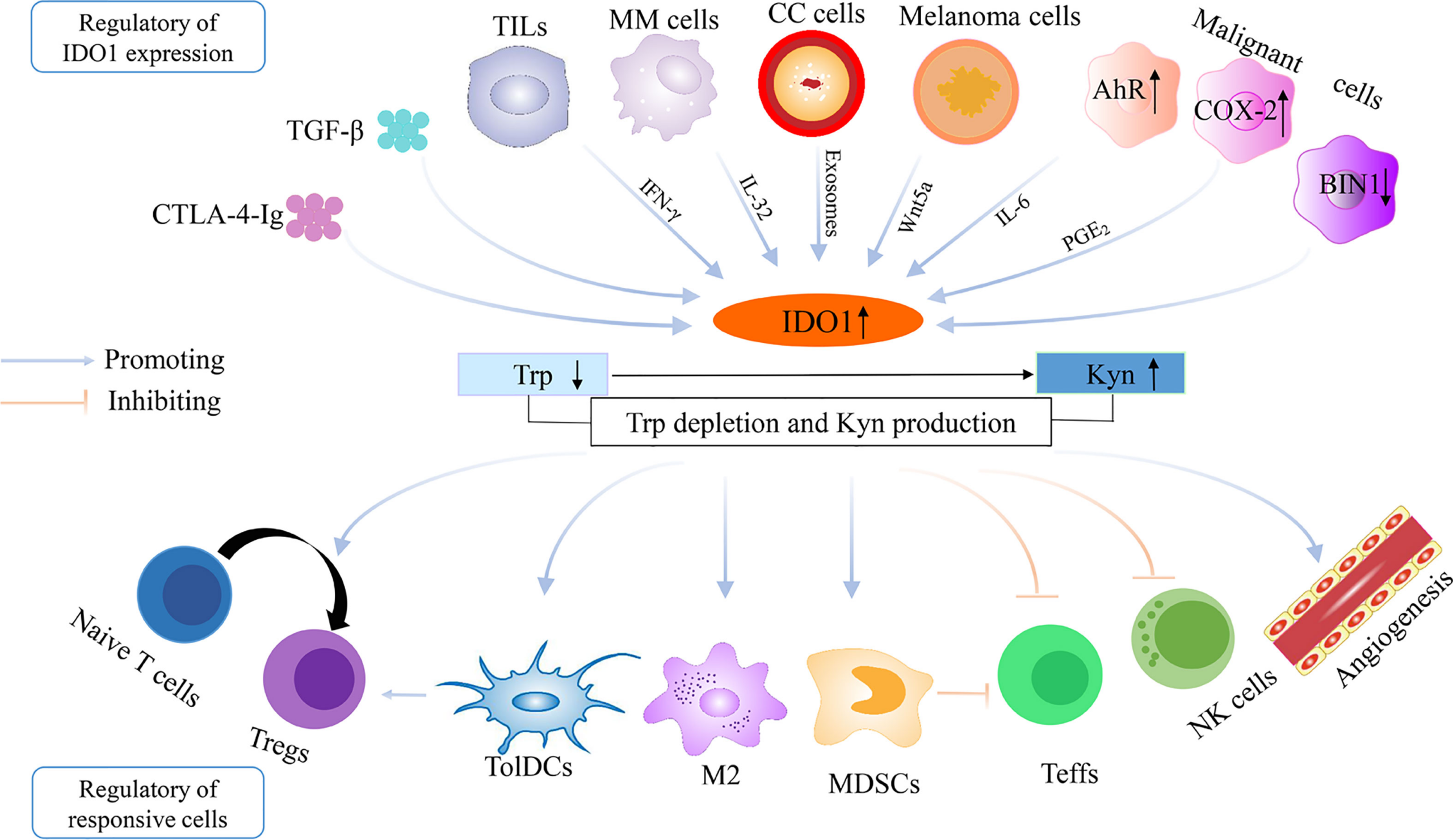
Indoleamine-pyrrole 2,3-dioxygenase (IDO or INDO) is involved in tryptophan metabolism
Indoleamine-pyrrole 2,3-dioxygenase (IDO or INDO EC 1.13.11.52) is a heme-containing enzyme physiologically expressed in a number of tissues and cells, such as the small intestine, lungs, female genital tract or placenta. In humans is encoded by the IDO1 gene. IDO is involved in tryptophan metabolism. It… Read more.
-
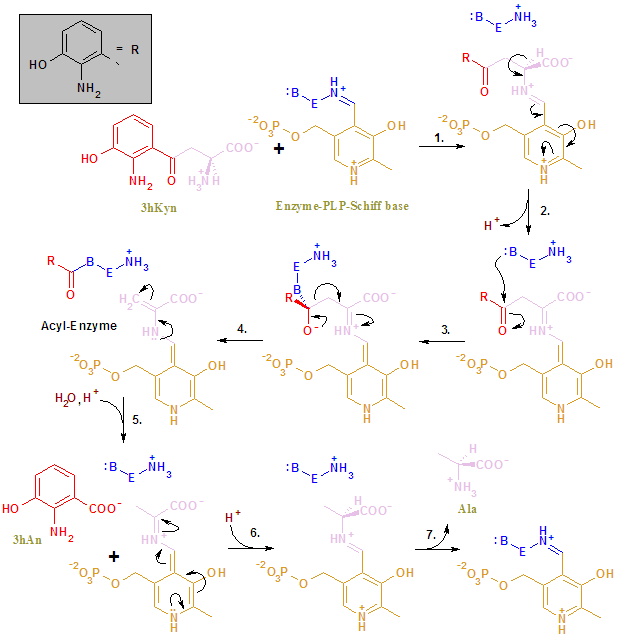
Kynureninase or L-Kynurenine hydrolase (KYNU) is part of the pathway for the catabolism of Trp and the biosynthesis of NAD cofactors from tryptophan (Trp).
Kynureninase or L-Kynurenine hydrolase (KYNU) (EC 3.7.1.3) is a PLP dependent enzyme that catalyses the cleavage of kynurenine (Kyn) into anthranilic acid (Ant). It can also act on 3-hydroxykynurenine (to produce 3-hydroxyanthranilate) and some other (3-arylcarbonyl)-alanines. Note: 3-Hydroxykynurenine is a metabolite of tryptophan, which filters UV light… Read more.
-
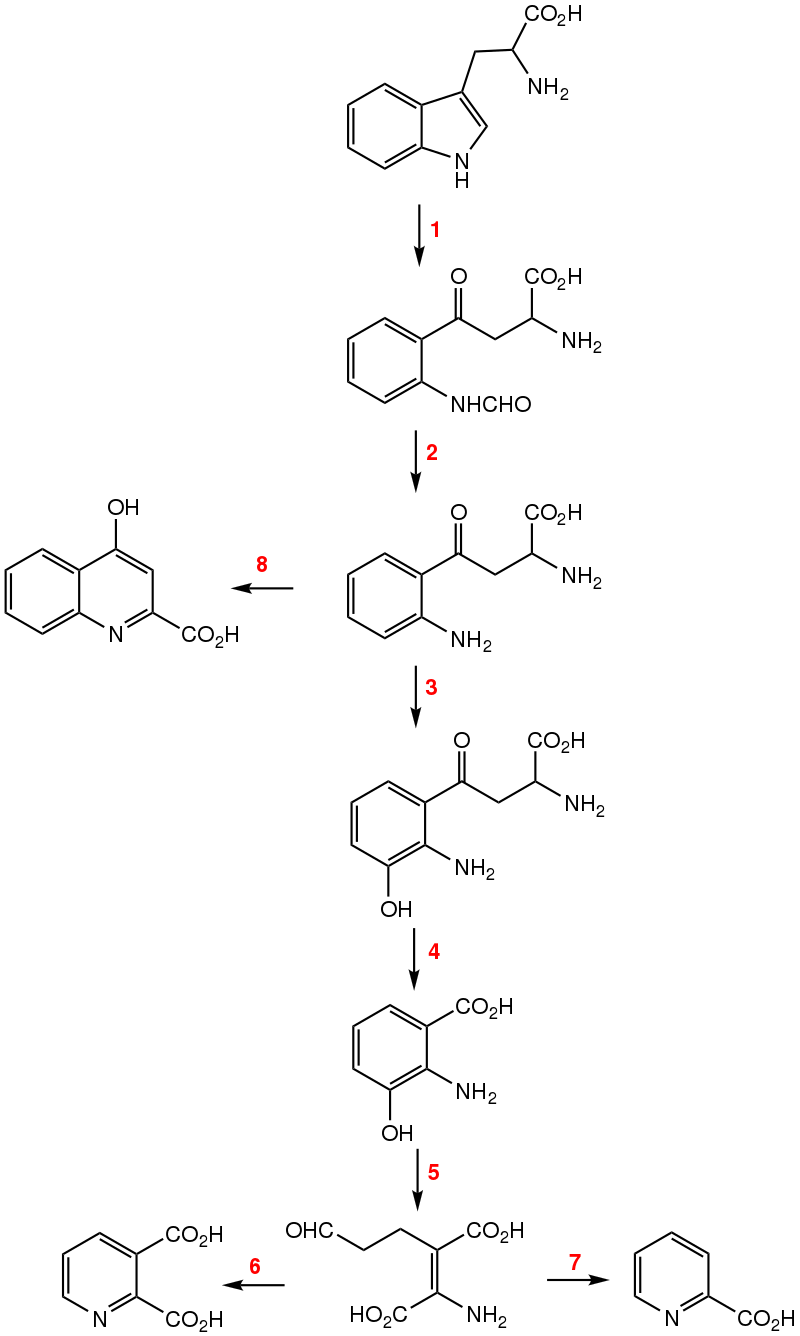
Ommochrome (visual pigment) and Kynurenine (a metabolite of the amino acid l-tryptophan used in the production of niacin)
Ommochrome (or visual pigment) refers to several biological pigments that occur in the eyes of crustaceans and insects. The eye color is determined by the ommochromes. Ommochromes are also found in the chromatophores of cephalopods, and in spiders. Ommochromes are metabolites of tryptophan, via kynurenine and 3-hydroxykynurenine.… Read more.